
Ready to Feed Formula vs Powder – Which is Right for Your Baby?
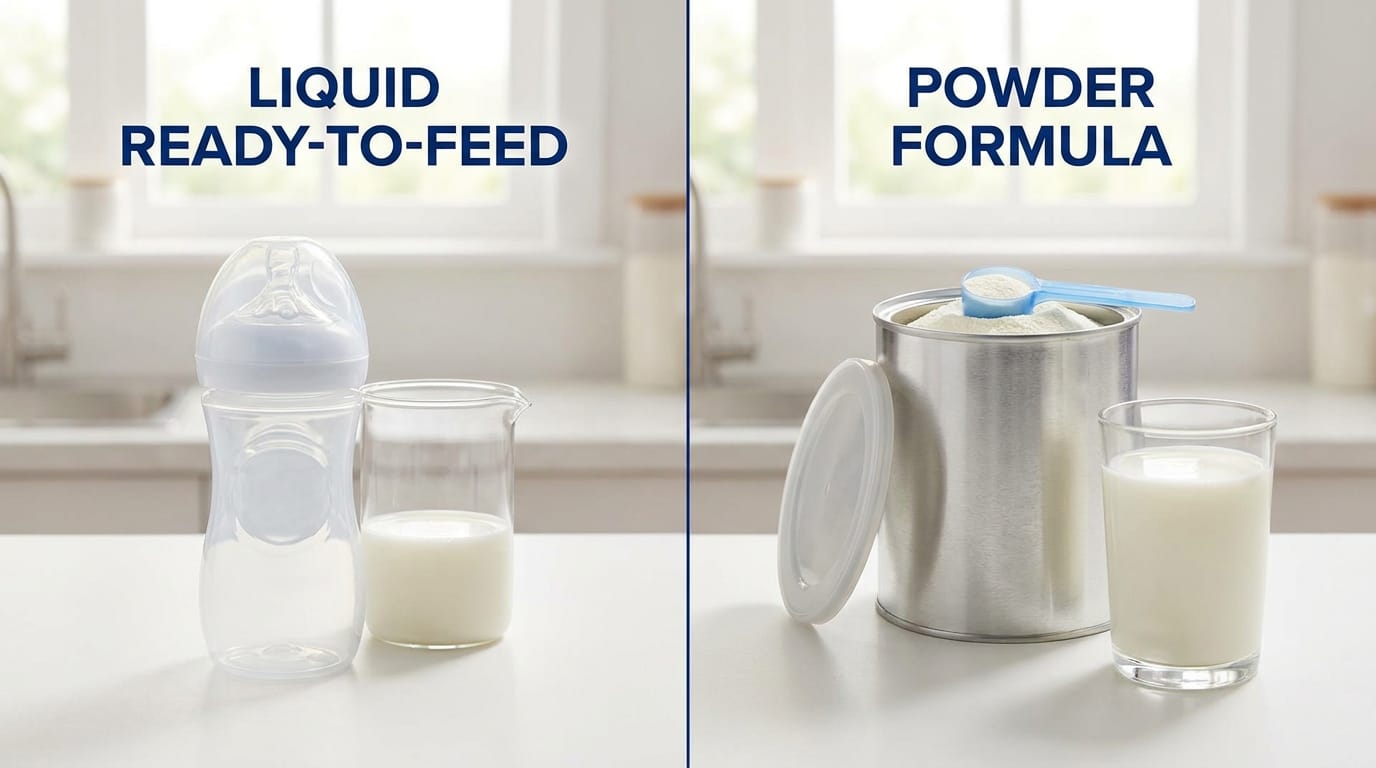
If you are currently staring at the baby aisle trying to figure out the great debate of ready to feed formula vs powder, take a deep breath because you are exactly where you need to be.
Figuring out what to feed your little one can feel completely overwhelming. There are so many options, brands, and opinions out there.
But don’t worry, my friend. Today, we are going to sit down, grab a cup of coffee, and break this whole thing down together.
By the end of this comprehensive guide, you will know exactly which option fits your baby’s tummy, your lifestyle, and your budget. Let’s dive right in!
Understanding the Basics: Ready to Feed Formula vs Powder
Before we start comparing the two, it is super important to understand what each of these options actually is. When looking at ready to feed formula vs powder, the fundamental difference lies in how they are manufactured and prepared.
Ready to feed (often abbreviated as RTF) is exactly what it sounds like. It is a liquid formula that comes in a bottle or a carton, perfectly mixed and ready for your baby to drink immediately.
Powdered formula, on the other hand, comes in a large tub or can. It is dehydrated, meaning you have to act like a little chemist and mix it with safe, clean drinking water before every single feed.
Both options are highly regulated, nutritionally complete, and perfectly safe for your baby. However, they serve different purposes for different families.
What Makes Ready to Feed So Special?
- Completely Sterile: The liquid is sterilized during the manufacturing process.
- Zero Prep Work: You just open, pour, and feed.
- Perfect Consistency: No clumps or air bubbles to worry about.
What Makes Powdered Formula Great?
- Budget-Friendly: It is significantly cheaper per ounce.
- Eco-Friendly: Less packaging waste compared to liquid bottles.
- Longer Shelf Life: A tub lasts about a month after opening.
The Convenience Factor: Late Nights and Busy Days
Let’s be honest for a second. When your baby is screaming at 3:00 AM, every single second feels like an absolute eternity.
This is where the debate between ready to feed formula vs powder really starts to heat up for most new parents. Convenience is often the ultimate deciding factor.
With ready to feed, those middle-of-the-night feeds are a breeze. You simply grab a bottle, twist off the cap, attach a clean nipple, and you are good to go.
There is no measuring, no mixing, and no waiting for water to warm up or cool down. It is a total lifesaver when you are sleep-deprived.
Powdered formula requires a bit more brainpower. You have to measure the water perfectly, add the exact number of scoops, and shake it up.
If you shake it too hard, you create air bubbles which can lead to a gassy, fussy baby. You also have to ensure the water is safe, which sometimes means boiling it and letting it cool.
The Financial Breakdown: Which One Fits Your Budget?
Raising a tiny human is expensive. Between diapers, wipes, clothes, and cribs, your bank account is probably already feeling the pinch.
When you compare ready to feed formula vs powder from a financial perspective, there is a very clear winner. Powdered formula is significantly more cost-effective.
Because you are not paying for the water weight, the heavy packaging, or the sterilization process, powder is much cheaper to produce and ship. This savings is passed directly on to you.
If your baby drinks formula exclusively, using ready to feed liquid all the time can easily double or even triple your monthly grocery bill.
Many parents find a happy medium. They use the cheaper powder while they are at home and keep a few bottles of the liquid version for travel or emergencies.
Safety and Sterility: What Every Parent Must Know
Here is a very important fact that many new parents do not know. Powdered baby formula is not completely sterile.
While the factories are incredibly clean, the powder itself can occasionally harbor a bacteria called Cronobacter sakazakii. For a healthy, full-term baby, this is rarely an issue.
However, if you have a premature baby, a newborn under two months old, or a baby with a weakened immune system, pediatricians strongly recommend the liquid version.
In the battle of ready to feed formula vs powder, the liquid version wins the safety round for vulnerable infants. Because it is commercially sterilized, the risk of bacterial infection from the formula itself is virtually zero.
Once your baby is a bit older and their immune system is stronger, switching to powder is completely safe and widely recommended by doctors.

Taste and Digestion: Does Your Baby Have a Preference?
You might think that the same brand of formula would taste exactly the same whether it is liquid or powder. Surprisingly, this is not always true!
The liquid version tends to be slightly thicker and smoother. It often has a richer, creamier texture that many babies absolutely love.
Because you don’t have to shake liquid formula, there are zero air bubbles. Fewer air bubbles mean less swallowed air, which can drastically reduce gas, spit-up, and colic.
Powdered formula can sometimes feel slightly grainy if it is not mixed perfectly. Depending on your water supply, the taste can also vary slightly from house to house.
If you have a baby with a very sensitive stomach, you might notice they digest the liquid version much easier. However, most babies transition between the two without any complaints!
Travel Friendly Options: Ready to Feed Formula vs Powder
Leaving the house with a baby feels like you are packing for a month-long expedition. Your diaper bag is stuffed to the brim.
When you are out and about, deciding on ready to feed formula vs powder can change how you pack. Both have their unique pros and cons for travel.
Traveling with Liquid
- The Pros: It is incredibly easy. You just toss a few sealed bottles into your bag. You don’t need to find clean water or wash mixing bottles.
- The Cons: It is heavy. Carrying a day’s worth of liquid formula adds a lot of weight to your bag. Also, once opened, it must be refrigerated if not finished.
Traveling with Powder
- The Pros: It is lightweight. You can pre-measure the powder into little dispenser containers.
- The Cons: You must have access to clean, safe drinking water. Mixing it on an airplane or in the back of a car can get very messy, very quickly.
Shelf Life and Storage Guidelines
How you store your baby’s food is critical for their health. The rules for storing these two types of formulas are completely different.
Unopened, both types can sit safely in your pantry for a long time. Just always remember to check the expiration date on the packaging.
Once you open a tub of powder, you generally have about 30 days to use it before it goes bad. You must keep it in a cool, dry place and never stick the scoop back in if it is wet.
Liquid formula is much more perishable once opened. A large jug of ready to feed must be stored in the refrigerator immediately after opening and used within 48 hours.
If your baby drinks from a bottle and doesn’t finish it, you must throw away the leftover formula within one hour, regardless of whether it was powder or liquid.
Environmental Impact: Making an Eco-Conscious Choice
If you are a family that tries to keep an eye on your carbon footprint, this is an important section for you.
Using exclusively liquid formula generates a massive amount of plastic waste. Even if you recycle, the sheer volume of single-use plastic bottles can feel overwhelming.
Powdered formula comes in large tubs or metal cans. While they still use packaging, one can of powder creates far less waste than the equivalent amount of liquid bottles.
Plus, shipping heavy liquid formula across the country requires more fuel and energy compared to shipping lightweight dehydrated powder.
If being eco-friendly is a priority for your family, powdered formula is definitely the greener choice.
How to Safely Switch Between Ready to Feed Formula vs Powder
Many parents start their newborns on liquid formula at the hospital and eventually want to switch to powder to save money.
You might be wondering if making the switch is going to upset your baby’s delicate tummy. The good news is that most babies handle the transition beautifully!
Here are some friendly tips to make the switch as smooth as possible:
- Take it Slow: Don’t switch cold turkey. Try offering one bottle of powder a day while keeping the rest liquid.
- Watch for Reactions: Keep an eye out for changes in their poop, extra gas, or fussiness.
- Check the Temperature: Sometimes babies reject powder simply because the water temperature is different than their usual room-temperature liquid.
- Mix Them (Carefully!): You can technically mix liquid and prepared powder together in the same bottle to help them get used to the taste. Never use liquid formula instead of water to mix dry powder!
If your baby seems incredibly fussy after the switch, don’t panic. Just give it a few days, and always consult your pediatrician if you are worried.
Frequently Asked Questions (FAQs)
When parents are researching ready to feed formula vs powder, they usually have a lot of specific questions. Let’s tackle some of the most common ones right here!
1. Is ready to feed formula better for constipation?
For some babies, yes! Because there are no clumps and no air bubbles from shaking, it can be gentler on the digestive tract. The slightly thicker consistency also sits well in sensitive tummies.
2. Can I use tap water for powdered formula?
It depends entirely on where you live. If your local tap water is deemed safe by your health department, it is usually fine. However, many pediatricians recommend boiling the water first or using purified baby water just to be safe.
3. Why is my baby spitting up more with powder?
This is usually due to swallowed air. When you shake a bottle to mix the powder, it creates lots of tiny bubbles. Try swirling the bottle gently instead of shaking it vigorously, or use a formula mixing pitcher.
4. Do I need to warm up ready to feed formula?
Nope! Babies can safely drink it at room temperature. However, if your baby prefers it warm, you can safely heat the bottle in a bowl of warm water. Never use a microwave!
5. Does the liquid version stain clothes more?
Yes, it actually does! Liquid formula often contains slightly different emulsifiers that can leave stubborn yellow stains on white onesies. Make sure you use a good bib and treat stains quickly!
Daycare Requirements: What You Need to Know
If your little one is heading off to daycare, you will need to check their specific policies regarding baby food.
Many daycares actually prefer, or even require, that you bring in bottles that are already prepared.
If you are using liquid formula, you simply fill the bottles at home and drop them off in a cooler bag. It is fast and easy.
If you are using powder, you will have to mix all the bottles at home the night before. This can add a good 15 minutes to your nightly routine.
Some daycares will allow you to leave a sealed tub of powder and a clean water source, but they usually charge extra for the time it takes their staff to mix it.
Making the Final Decision for Your Family
At the end of the day, when looking at ready to feed formula vs powder, there is no single “wrong” choice.
Both options will help your baby grow big, strong, and healthy. Your decision ultimately comes down to what makes your life easier and what fits your budget.
If you have a preemie or value ultimate convenience at 3 AM, the liquid version is your best friend.
If you have a healthy, full-term baby and want to save hundreds of dollars a year, powder is the clear winner.
Remember, you can always change your mind! You can use liquid for the first two months and switch to powder later. Do whatever works best for your family’s unique journey.
Conclusion and Final Thoughts
Navigating the formula aisle doesn’t have to be a nightmare. By understanding the real differences between ready to feed formula vs powder, you are already stepping up as an amazing, informed parent.
Trust your gut, talk to your pediatrician if you have any lingering doubts, and remember that a fed, happy baby is the only thing that truly matters.
You are doing a fantastic job, and your baby is lucky to have you looking out for them so carefully!