TSA rules for breast milk The Ultimate Guide
If you are gearing up for a flight and feeling incredibly stressed about the tsa rules for breast milk, take a deep breath because you are in the right place. Traveling is already exhausting, and when you add pumping, storing, and transporting your precious “liquid gold” to the mix, it can feel absolutely overwhelming.
But grab a cup of coffee (or tea!), sit back, and let’s chat like old friends. I am here to walk you through exactly what to expect at the airport.
You put a lot of hard work, time, and love into pumping that milk. The last thing you want is a confused security officer asking you to toss it out.
Thankfully, the Transportation Security Administration (TSA) is actually very accommodating to nursing and pumping moms. You just need to know your rights and how the system works.
Let’s dive into everything you need to know to make your next flight an absolute breeze!
What Are the Official TSA Rules for Breast Milk?
When you first start researching airport security, you probably hear about the dreaded 3-1-1 liquids rule. This rule states that liquids must be in containers of 3.4 ounces (100 milliliters) or less.
However, under the official tsa rules for breast milk, your baby’s food is considered a “medically necessary liquid.” This is the most important fact you need to remember!
Because it is medically necessary, breast milk is completely exempt from the standard liquid limits. You are allowed to bring milk in quantities greater than 3.4 ounces.
This exemption applies to both carry-on bags and checked luggage. You can pack as much as you need to safely feed your baby during your travels.
Here is a quick breakdown of what counts under this medical exemption:
- Expressed breast milk (fresh or frozen)
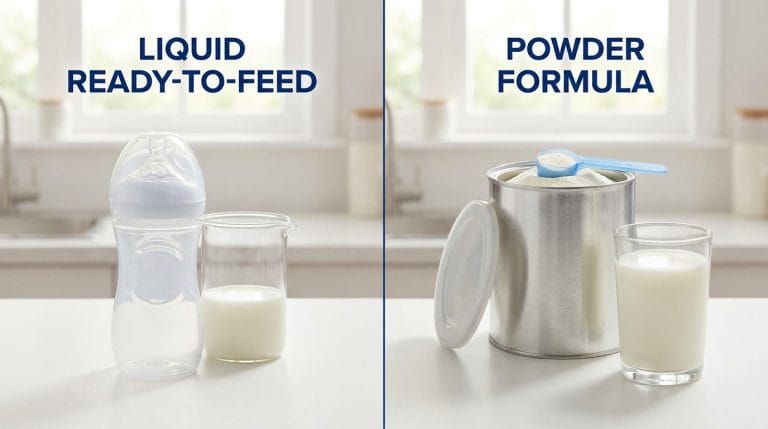
- Baby formula (liquid or powder)
- Toddler drinks and pureed baby food
- Purified water for mixing formula
Does My Baby Need to Be With Me?
This is one of the most common worries pumping mothers have. What if you are traveling for a business trip without your little one?
Good news! Your baby does not need to be present for you to carry breast milk through security.
Whether your baby is in your arms, at home with a partner, or staying with grandparents, you have the full right to transport your milk.
The Rules on Ice Packs and Coolers
To keep your milk safe, you will obviously need to keep it cold. The TSA allows ice packs, freezer packs, and gel packs in your carry-on luggage.
However, there is a small catch that you need to be aware of. If your ice packs are completely frozen solid when you go through the security checkpoint, they are treated as solids and will pass through easily.
If your ice packs have started to melt and are slushy or liquid at the bottom, they will be subject to additional screening. Don’t panic, though! Because they are being used to cool medically necessary liquids, they will still be allowed through.
Packing Tips That Meet TSA Rules for Breast Milk
Now that we know the basics, let’s talk about how to pack your bag. When you follow the tsa rules for breast milk while packing, you ensure a much smoother and faster experience at the security checkpoint.
Being organized is your best friend here. If you toss your milk bottles randomly into your carry-on, you are going to slow down the screening process.
Choosing the Right Storage Containers
You have a few options when it comes to storing your milk for a flight. You want containers that are durable, leak-proof, and easy for the officers to inspect.
- Breast milk storage bags: These are great because they save space and freeze flat. Just make sure they are sealed tightly!
- Hard plastic baby bottles: Perfect for feeding on the go, but they take up a bit more room in your cooler.
- Glass bottles: Safe and non-toxic, but heavier and prone to breaking if you drop your bag.
Personally, I recommend a mix of storage bags for the bulk of your milk and one or two hard bottles for immediate use.
Building the Perfect Cooler
Your cooler is going to be your most important piece of luggage on this trip. Invest in a high-quality, insulated cooler bag that easily fits under an airplane seat.
Pack your milk tightly at the bottom, surrounded by your frozen ice packs. Fill any empty space with crumpled paper towels or newspaper to trap the cold air inside.
If you are carrying frozen milk, pack it right next to the ice packs. Frozen milk acts like an ice pack itself, helping to keep the entire cooler temperature down!
Step-by-Step: Going Through Airport Security
Alright, you made it to the airport. Your cooler is packed, your pump is in its bag, and you are standing in the security line. What happens next?
Walking up to the TSA agent can feel intimidating. But remember, you are totally prepared and you know exactly what to do.
Step 1: Declare Your Liquids
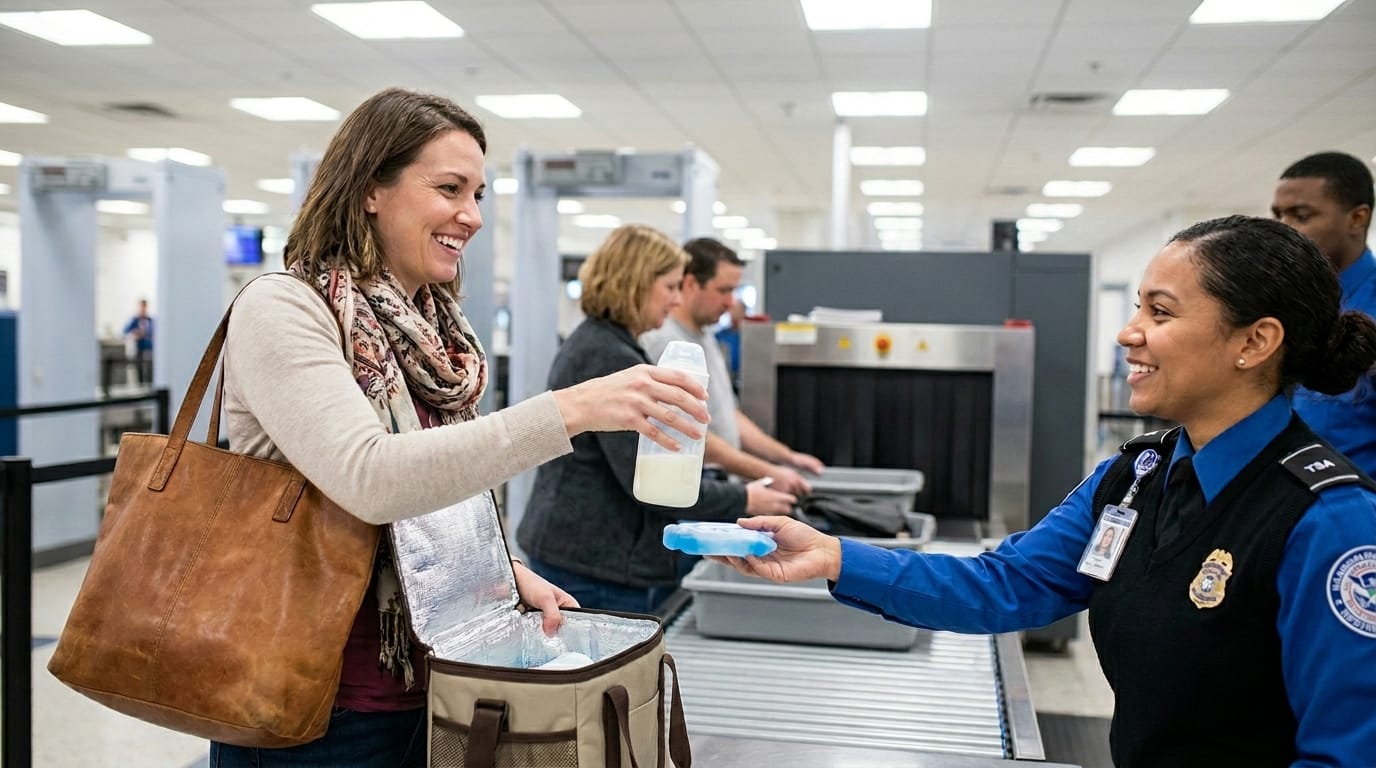
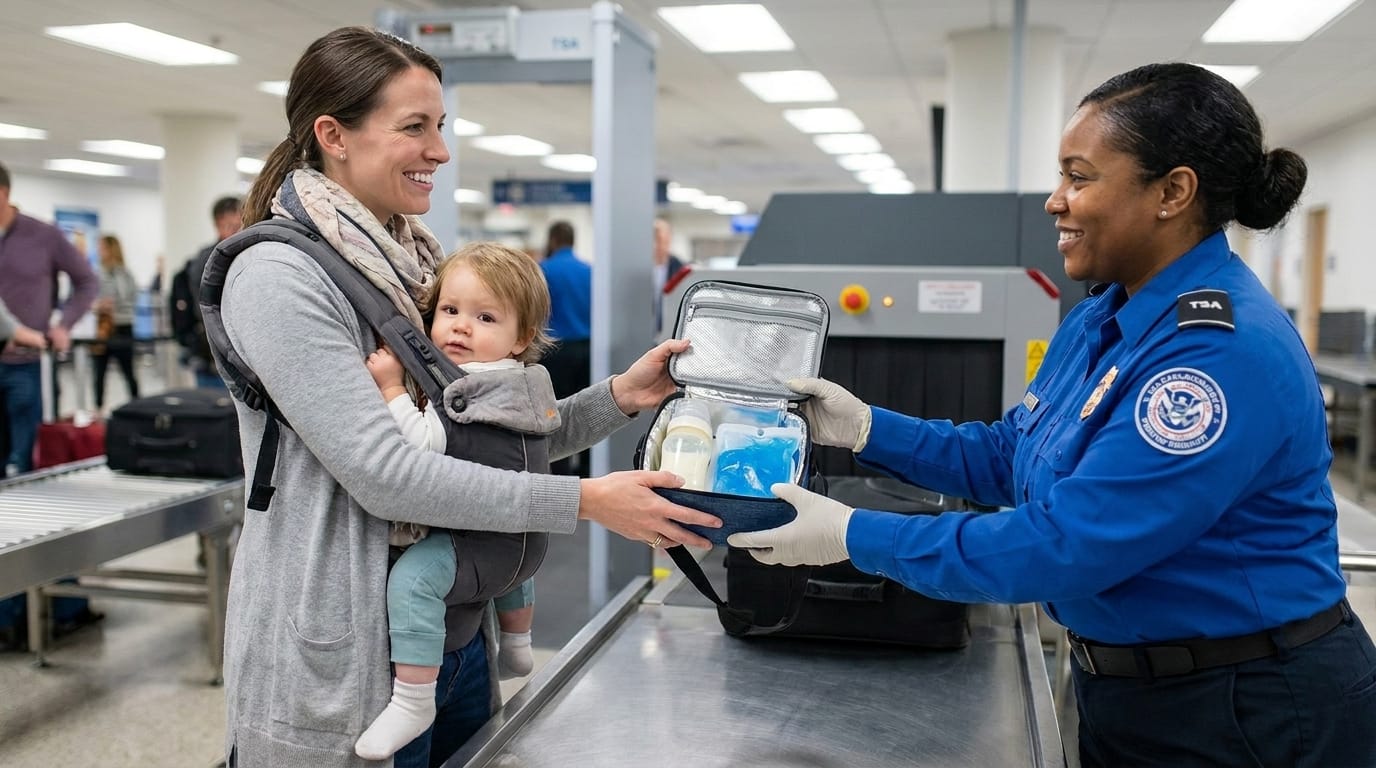
Before you put your bags onto the conveyor belt, tell the TSA officer that you are carrying breast milk. You can simply say, “Hi, I have breast milk and ice packs in this cooler.”
You should separate your milk and cooler from your other carry-on items. Place the cooler in its own bin on the X-ray belt.
Step 2: The Screening Process
The TSA officer will usually send your cooler through the X-ray machine. X-rays have no negative effect on breast milk or food, so it is completely safe for your baby to consume afterward.
However, if you are uncomfortable with the X-ray, you have the right to request alternative screening. Just know that asking for alternative screening will take a bit more time.
Step 3: Additional Testing
Because breast milk is a liquid over 3.4 ounces, the TSA officer will likely need to perform additional tests. They might ask you to open the bottles or bags so they can hover a small test strip over the liquid.
This test is checking for explosive vapors. The officers are trained not to dip anything into your milk. Your milk will not be contaminated.
If you are carrying frozen milk, it usually requires less testing than liquid milk. They may just swab the outside of the container.
Navigating Flights with Your Breast Pump
We’ve talked a lot about the milk, but what about the machinery? Your breast pump is a crucial part of your journey, and you need to keep it safe.
The FDA considers a breast pump to be a medical device. Because of this classification, most airlines will let you bring your pump bag on board for free.
Does a Pump Bag Count as a Carry-On?
In the vast majority of cases, your breast pump bag does not count toward your carry-on allowance. You can bring your suitcase, your personal item (like a purse), AND your breast pump bag.
However, airline policies can vary slightly, especially on budget airlines. It is always a smart idea to call your airline a few days before your flight just to confirm.
Pumping at the Airport
If you need to pump before your flight, you are in luck! Most major airports now have dedicated lactation rooms or Mamava pods.
These are private, clean spaces with electrical outlets and comfortable seating. You can usually find their locations by checking the airport’s official website or downloading the Mamava app.
Pumping on the Airplane
Pumping in the air is totally doable, but it requires a little bit of planning. Airplane bathrooms are tiny, and you probably don’t want to hang out in there for 20 minutes.
If you are comfortable with it, you can pump right in your seat! A wearable, hands-free pump (like a Willow or Elvie) is a lifesaver for flights.
If you use a traditional pump, bring a nursing cover. Just make sure your pump has fully charged batteries, as not all airplane seats have reliable electrical outlets.
Common Mistakes to Avoid When Following TSA Rules for Breast Milk
Even the most prepared moms can sometimes run into hiccups at the airport. Let’s look at a few common mistakes so you can avoid them entirely.
By knowing these pitfalls, you can navigate the tsa rules for breast milk like an absolute pro and save yourself a ton of anxiety.
Mistake 1: Not Allowing Extra Time
Additional screening takes time. If the airport is busy, waiting for a TSA agent to test your milk can easily add 15 to 30 minutes to your security process.
Never arrive at the airport at the last minute when traveling with breast milk. Give yourself plenty of buffer time so you aren’t sprinting to your gate.
Mistake 2: Getting Angry with the Officers
I completely understand how protective you are of your milk. But if an officer seems confused or wants to test your bottles, getting defensive will only slow things down.
Stay calm, polite, and firmly state your rights. Keep a printed copy of the TSA guidelines in your bag just in case you need to gently show them the policy.
Mistake 3: Packing Wet Ice
While gel packs and freezer blocks are perfectly fine, do not pack your cooler with loose, wet ice cubes from your freezer.
If the ice melts into a pool of water at the bottom of your cooler, the TSA will likely make you dump the water out. This will leave your milk without a cooling source for the rest of the trip.
If you absolutely need ice, put it inside heavy-duty, leak-proof Ziploc bags.
Frequently Asked Questions (FAQs)
Still have a few questions bubbling up? You aren’t alone. Here are the most common questions moms ask about flying with their liquid gold.
Can I bring dry ice to keep my milk frozen?
Yes, you can! The FAA allows you to carry up to 5.5 pounds (2.5 kg) of dry ice in either your carry-on or checked baggage.
However, the cooler must be vented so the carbon dioxide gas can escape. You must also clearly label the package as containing dry ice and state its weight. Always check with your specific airline, as they may have their own notification rules.
How do I wash pump parts on the go?
Washing pump parts in an airplane or airport bathroom sink isn’t the most sanitary option. Instead, pack a stash of breast pump cleaning wipes!
These wipes are designed specifically to clean breast milk residue safely. You can also buy a travel-sized bottle of dish soap and a portable collapsible wash basin if you have a long layover.
What if my milk thaws during a long flight?
Breast milk is remarkably resilient. If your frozen milk begins to thaw but still has visible ice crystals in it, it is still considered frozen and can be safely re-frozen when you get to your destination.
If the milk has completely thawed but is still cold to the touch, you cannot refreeze it. You must use it within 24 hours.
What do I do if an officer insists I throw the milk away?
This is incredibly rare, but if a TSA officer tells you that you cannot bring your milk through, do not throw it away.
Politely step back and ask to speak to a Supervisory TSA Officer. Remind them that breast milk is a medically necessary liquid exempt from the 3-1-1 rule. Having the rules printed out on your phone or on paper is your best defense here.
International Travel: A Quick Note
Everything we have discussed so far applies to flights departing from within the United States, governed by the TSA rules for breast milk.
If you are flying internationally, the rules can change depending on your destination country. When you fly back to the US from a foreign country, you will be subject to their security agency’s rules.
For example, some European airports are very strict about the baby being present if you are carrying liquid milk. Always research the aviation security rules of the specific country you are visiting before you pack! tsa rules for breast milk
Final Thoughts and Call to Action
Phew! We covered a lot of ground today, didn’t we? Traveling as a parent is a wild adventure, but you are more than capable of handling it.
I hope this comprehensive guide to the tsa rules for breast milk helps you feel empowered, prepared, and ready to take to the skies. Remember, you are doing an amazing job providing for your baby, and a little airport security line is not going to stand in your way!
If you stay organized, arrive early, and communicate clearly with the security officers, you will be at your gate sipping a well-deserved iced coffee in no time.
tsa rules for breast milk