The Ultimate Parent’s Guide to Safe Sleep Guidelines for 2-Year Old Toddlers
Welcome to the exciting, and sometimes exhausting, world of toddlerhood! If you are looking for the absolute best safe sleep guidelines for 2-year old kids, you have come to exactly the right place.
As parents, we constantly worry if we are doing things right, especially when our little ones are finally snoozing. Let’s walk through this together, friend to friend, and set your mind at ease.
Navigating the transition from baby to toddler is a huge milestone for both you and your child. They are growing more independent, learning new skills, and testing boundaries every single day.
Because their physical abilities are changing so rapidly, their bedroom setup needs to evolve as well. What was perfectly safe for a six-month-old might not work for an active, climbing toddler.
Grab a cup of coffee, take a deep breath, and let’s dive into everything you need to know to keep your little explorer safe and sound all night long.
Why Understanding Safe Sleep Guidelines for 2-Year Old Toddlers is Crucial
You might be thinking, “My baby is basically a big kid now, do the strict rules still apply?” The short answer is yes, but the rules have definitely changed since the newborn days.
Toddlers are little acrobats who can climb, roll, and wiggle their way into tricky situations while dreaming. They have a knack for finding danger where we adults only see normal household items.
That is exactly why following updated safe sleep guidelines for 2-year old explorers is so incredibly important. We want them comfortable, but safety always comes first and foremost.
At this age, the risks shift from Sudden Infant Death Syndrome (SIDS) to physical accidents like falls, entrapment, and wandering. Being proactive is the best way to ensure everyone in the house gets a good night’s rest.
Key Safe Sleep Guidelines for 2-Year Old Children
Let us break down the absolute essentials you need to know for your toddler’s bedroom setup. It is much easier than you might think, and you probably already have a lot of this covered!
The Great Crib Debate: When is it Time to Move?
Most two-year-olds are still perfectly safe and happy sleeping right in their cribs. If your child isn’t actively trying to climb out, there is absolutely no rush to transition them to a big bed.
To maximize safety while they are still in the crib, make sure to drop the mattress to its absolute lowest setting. This simple step prevents your little gymnast from taking an unexpected tumble over the rail.
If you catch them throwing a leg over the top rail, or if they reach 35 inches in height, it is a clear sign that crib days are officially over.
Blankets, Pillows, and Comfort Items
Here is some fantastic news! Unlike the infant stage, it is generally safe to introduce a small, firm pillow and a lightweight blanket when your child turns two.
However, it is vital to keep the bedding minimal and simple. Avoid giant, fluffy comforters or an entire zoo of stuffed animals inside the sleeping area.
Large items can still create a suffocation hazard if they get tangled, or they can serve as a convenient step-stool for a toddler looking to climb out of their crib.
Room Temperature and Lighting
Keeping the room at a comfortable, consistent temperature is a big part of the safe sleep guidelines for 2-year old routines. You should aim for a cozy environment of around 68 to 72 degrees Fahrenheit.
Toddlers are not great at regulating their own body temperature, so a room that feels slightly cool to you is usually perfect for them. Dress them in breathable layers rather than cranking up the heat.
Use blackout curtains to keep the early morning sun from waking them up prematurely. A dim, warm-toned nightlight is completely fine if they are starting to develop a fear of the dark.
Toddler-Proofing the Bedroom: A Complete Checklist
If your child has figured out how to escape the crib, it is time for a toddler bed. But remember, once they are out of the crib, their entire bedroom essentially becomes their new crib!
You need to get down on your hands and knees to look at the room from their level. This helps you spot hazards you might miss while standing up.
Here is a quick checklist to make sure their room is a perfectly safe haven:
-
Secure all heavy furniture, like dressers and tall bookshelves, directly to the wall using anti-tip brackets.
-
Cover all electrical outlets with sliding safety covers or secure plug caps.
-
Ensure there are no dangling window blind cords anywhere near their reach, as these are a severe strangulation hazard.
-
Remove any small toys or choking hazards from the floor before tucking them in for the night.
-
Put a latch or lock on windows so they cannot be opened more than a few inches.
Adapting Safe Sleep Guidelines for 2-Year Old Bed Transitions
Moving to a “big kid bed” is a massive milestone, and it is completely normal for both of you to feel a little anxious about the change.
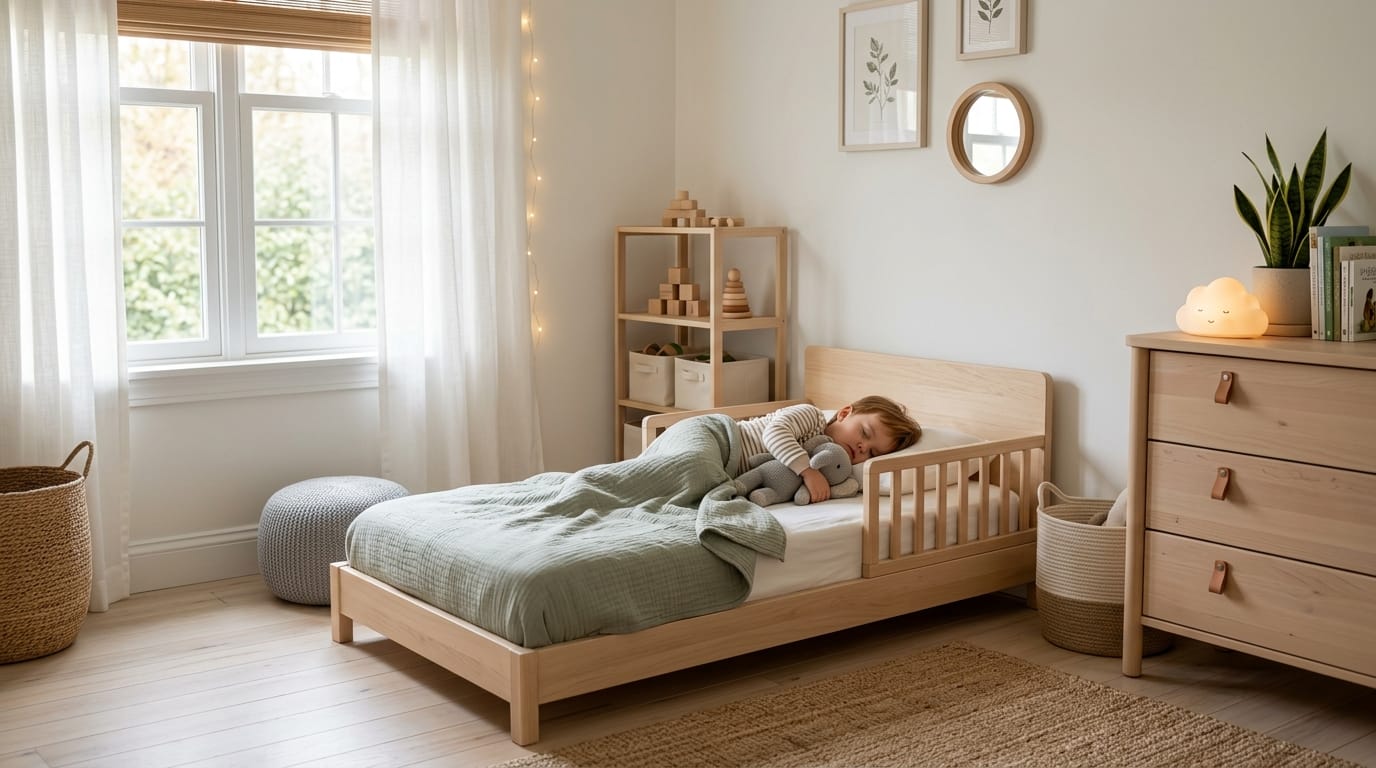
Start by using toddler guardrails on the sides of the new bed. This provides them with a physical boundary, gives a sense of security, and physically stops them from rolling onto the floor.
If they do happen to roll out, placing a soft, plush rug or a dedicated crash pad right next to the bed can offer you some extra peace of mind.
Keep the bed away from windows, radiators, and wall lamps. The safest spot for a toddler bed is usually flush against a solid wall, far from any external hazards.
Choosing the Right Sleepwear for Safety
What your toddler wears to bed plays a massive role in their overall nighttime safety and comfort. It isn’t just about picking the cutest pajamas!
Always opt for sleepwear that is either explicitly labeled as flame-retardant or is designed to be very snug-fitting. Snug-fitting cotton pajamas are a favorite because they eliminate loose fabric that could catch fire or snag on furniture.
Avoid any sleepwear that has drawstrings, hoods, or long ties. These can easily wrap around a toddler’s neck while they toss and turn.
If it is a chilly night, a wearable blanket or a toddler-sized sleep sack with foot holes is a brilliant, safe alternative to heavy, loose quilts.
Dealing with Nighttime Wanderings and Escapes
Once they realize they have newfound freedom, trust me, they will use it! Finding your toddler standing silently next to your bed at 2 AM is a classic parenting rite of passage.
A major factor in safe sleep guidelines for 2-year old wanderers is ensuring the rest of your house is perfectly secure while you are asleep.
Gently, quietly, and without making a fuss, walk them right back to their own bed. Keep your interactions boring and brief so they don’t think getting up is a fun new game.
You might want to install a baby gate at their bedroom door, or at the very top of the stairs. This keeps them safely contained on their floor and prevents dangerous midnight tumbles down the steps.
Managing the Two-Year Sleep Regression Safely
Just when you think you have everything figured out, the dreaded two-year sleep regression hits. Suddenly, your perfect sleeper is protesting bedtime and waking up crying.
This regression is totally normal and is usually caused by separation anxiety, nightmares, or cutting those painful two-year molars.
During this exhausting phase, it is tempting to break your safety rules just to get some rest. However, bringing them into your bed or giving them extra, unsafe comfort items can create dangerous habits.
Stick strictly to your established routines. Offer comfort and reassurance by sitting next to their bed, but try to avoid moving them from their safe sleep environment.
The Role of a Consistent Bedtime Routine
Safety isn’t just about the physical environment; it is also about setting your toddler’s brain and body up for a peaceful, uninterrupted night.
A consistent, predictable bedtime routine signals to their active little minds that the day is over and it is time to wind down. Keep it simple and stick to the same order every night.
A great routine might look like this:
-
A warm, relaxing bath to soothe tired muscles.
-
Putting on comfortable, snug-fitting pajamas.
-
Brushing those little teeth.
-
Reading two or three gentle, calming bedtime stories.
-
A final snuggle, a kiss goodnight, and turning on the white noise machine.
Try your absolute hardest to keep screen time completely out of the hour before sleep. The blue light from tablets and TVs can drastically disrupt their natural melatonin production.
Sickness and Safe Sleep Adjustments
When your toddler catches a cold or a stomach bug, everything gets turned upside down, including their sleep safely.
If they are terribly congested, you might be tempted to prop their mattress up or use extra pillows. Please consult your pediatrician before elevating a mattress, as it can sometimes create odd sleeping angles.
Instead, use a cool-mist humidifier in their room to help loosen congestion safely. Make sure the humidifier is placed well out of their reach and the cord is hidden.
It is perfectly fine to check on them more frequently when they are sick. Using a high-quality video monitor allows you to keep an eye on their breathing without opening the door and risking waking them up.
Safe Sleep While Traveling or on Vacation
Taking a family vacation is wonderful, but hotel rooms and rental houses are rarely set up with toddler safety in mind.
If you are staying in a hotel, immediately scan the room for hazards. Unplug unnecessary lamps, hide coffee maker cords, and block access to balconies.
A travel crib or a sturdy “pack and play” is usually the safest option for a two-year-old on the go. Make sure you only use the thin, firm mattress that comes specifically with the travel crib.
If they must sleep in a regular bed, ask the hotel for extra pillows to stuff under the fitted sheet on the edges. This creates a makeshift, safe bumper to prevent them from rolling onto the floor.
When Siblings Share a Room
If your two-year-old is sharing a room with an older sibling, you have a unique set of safety guidelines to consider to keep everyone happy.
The biggest rule: bunk beds are an absolute “no” for any child under the age of six. A two-year-old should never have access to the top bunk ladder.
Ensure that the older sibling’s small toys—like building blocks, marbles, or small action figures—are stored completely out of the toddler’s reach to prevent choking hazards during the night.
Have an honest conversation with the older sibling about keeping the room safe. Teach them not to put blankets over the toddler or toss toys into their crib or bed.
Red Flags: When to Call the Pediatrician
While most sleep issues at this age are behavioral or developmental, there are a few physical signs that you should never ignore.
If your toddler consistently snores loudly, gasps for air, or pauses their breathing during sleep, schedule an appointment with your pediatrician immediately.
These can be signs of sleep apnea, which requires medical attention. Also, if they are suddenly experiencing severe night terrors that put them at risk of physical injury, a doctor’s guidance is invaluable.
Trust your parental intuition. If something about their sleep just doesn’t feel right to you, there is never any harm in getting a professional medical opinion.
Final Thoughts on Toddler Sleep Safety
Navigating the wild toddler years is a wonderful adventure, but sleep time should never be a source of stress or anxiety for you.
By sticking to these safe sleep guidelines for 2-year old kids, you are doing the absolute best you can. You are creating a secure, comforting haven where they can rest, heal, and grow.
Remember, perfection isn’t the goal; consistency and awareness are. You are doing a truly fantastic job raising your little one.
Trust your instincts, make the necessary safety tweaks to their bedroom, and try to enjoy these precious, quiet moments while they last!