The Ultimate Guide to US Customs Baby Formula Rules
Let’s face it, traveling internationally with a baby is a huge adventure, but figuring out the exact rules for us customs baby formula can feel completely overwhelming! If you are planning a trip to the United States and wondering how to bring your baby’s meals across the border, you are in the right place.
As a parent, your top priority is keeping your baby happy, healthy, and well-fed. But the last thing you want is to be stuck at the airport, exhausted after a long flight, watching a customs officer confiscate your baby’s only food supply.
Grab a cup of coffee (or tea!), sit back, and let’s walk through everything you need to know. I promise to break down all the confusing legal jargon into simple, bite-sized pieces.
By the end of this guide, you will know exactly how to pack, declare, and travel with your baby’s formula without breaking a single sweat!
Navigating US Customs Baby Formula Rules Like a Pro
When you step off that plane and head toward the border control desks, you are dealing with two main agencies: Customs and Border Protection (CBP) and the Food and Drug Administration (FDA).
The CBP officers are the friendly (but serious) folks who check your passports and ask what you are bringing into the country. The FDA is the agency that sets the actual rules about what food and medicine are safe to cross the border.
When it comes to baby food, the US government wants to ensure that everything entering the country is safe and free from contamination.
Because baby formula is a highly regulated item in the United States, bringing it from another country requires a little bit of prep work. But don’t worry, it is entirely possible and happens thousands of times a day!
Why Are There Rules for Bringing Formula?
You might be wondering, “Why is baby food such a big deal?” It all boils down to safety and labeling standards.
The FDA has very strict nutritional and labeling requirements for infant formula sold in the US. They want to ensure that every scoop of powder or drop of liquid provides the exact nutrition a growing infant needs.
Sometimes, formulas from other countries—even highly developed ones—do not meet the specific labeling standards of the FDA.
Furthermore, the government wants to prevent massive commercial imports of unapproved items. That is why they draw a strict line between bringing a few cans for your own baby and bringing cases of it to sell.
How Much US Customs Baby Formula Can You Actually Bring?
This is easily the most common question parents ask when planning their trip. The good news is that the rules are designed with parents in mind.
The general rule of thumb is that you are allowed to bring infant formula into the United States for personal use.
But what exactly does “personal use” mean?
- Duration of your stay: The amount you bring should roughly match the length of your trip.
- A reasonable limit: Generally, an amount that lasts for up to 90 days is considered acceptable for personal use.
- Not for resale: You cannot bring enough formula to suggest you are going to sell it online or to other parents.
If you are coming for a two-week vacation, bringing three or four cans of formula is perfectly normal and expected. If you try to bring 30 cans for a one-week trip, you will likely face some tough questions!
Powder vs. Liquid: What You Need to Know
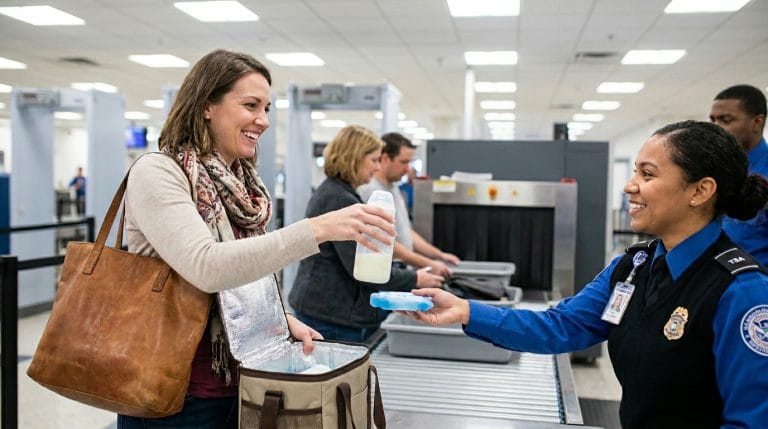
When packing your baby’s meals, you have to think about both the customs border (CBP) and airport security (like the TSA, if you have a connecting flight).
Here is how you should handle different types of formula:
- Powdered Formula: This is the easiest to travel with. You can pack it in both your checked luggage and your carry-on bags.
- Ready-to-Feed Liquid Formula: You can bring this, but be aware that large amounts of liquid in your carry-on will require extra screening by security.
- Breast Milk: While not formula, it is worth noting that breast milk is also allowed in reasonable quantities and does not need to fit into the standard tiny liquid bags.
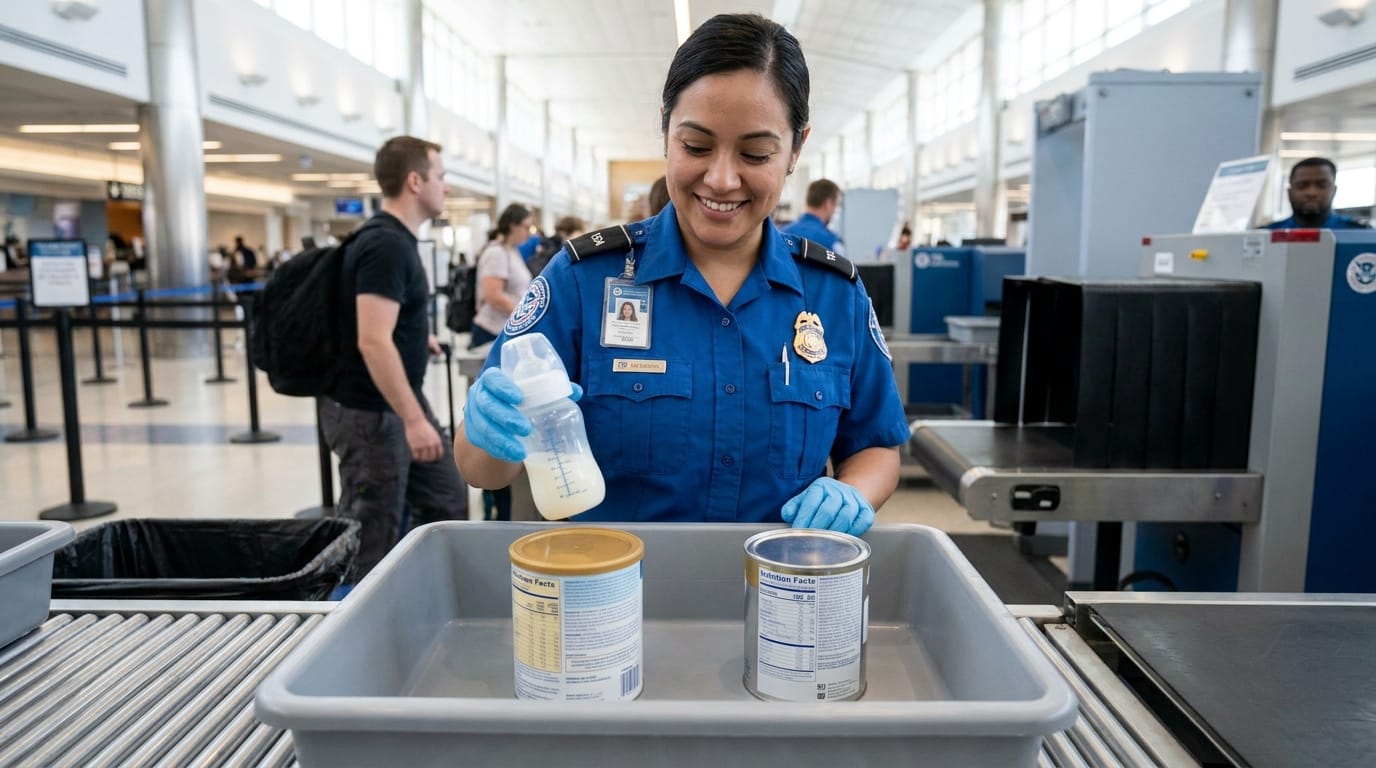
Always try to keep your formula in its original, factory-sealed containers. This makes it incredibly easy for border officers to see exactly what the product is and verify its ingredients.
The Truth About European Brands and US Customs Baby Formula Checks
Okay, let’s talk about the elephant in the room: European baby formulas.
Many parents around the world absolutely love European brands like HiPP, Holle, or Kendamil. However, traveling with them to the US can sometimes be a bit of a gray area.
Historically, many European formulas were not strictly evaluated or approved by the FDA, primarily due to differences in labeling instructions (like mixing ratios and languages).
Because of this, there have been instances in the past where strict customs officers confiscated these brands at the border.
However, recent changes and temporary FDA approvals (especially following the US formula shortages) have made things much more relaxed. Here is what you need to keep in mind:
- Personal use is key: If it is clearly for your baby traveling with you, officers are usually very understanding.
- Keep it sealed: Open, unidentifiable bags of powder look suspicious. Original, sealed boxes look like baby food.
- Have a backup plan: Just in case a strict officer decides to confiscate an unapproved brand, know what American brand you can buy as a backup.
Do not panic if you use a European brand. Just be honest, declare it, and explain that it is your baby’s sole source of nutrition for the trip.
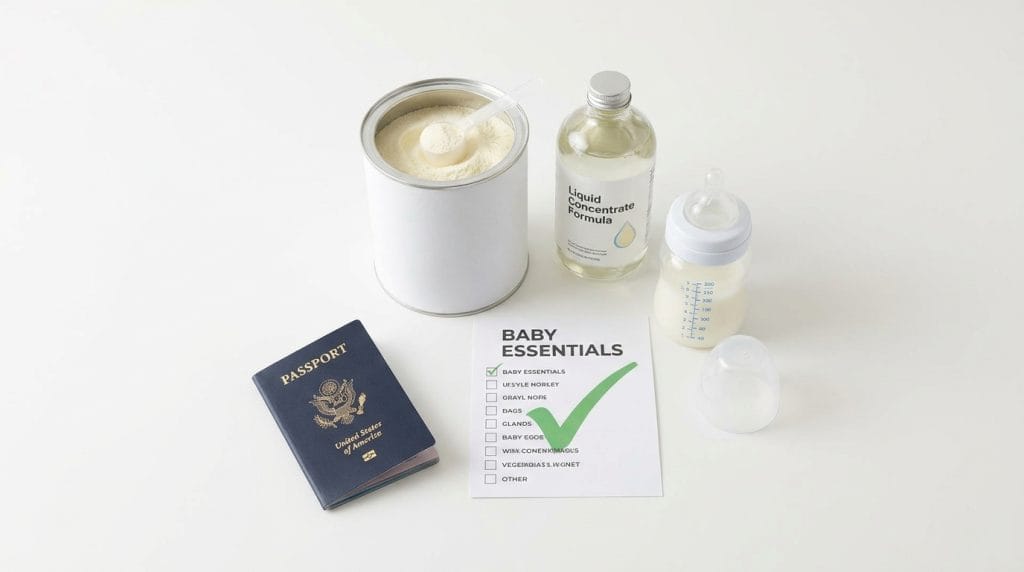
Step-by-Step: How to Declare Your Baby’s Food
Honesty is always the best policy when crossing international borders. The absolute worst thing you can do is try to hide your baby’s food.
If you fail to declare food items, you could face hefty fines, have your items confiscated, and even lose trusted traveler privileges like Global Entry.
Here is a simple, step-by-step guide to declaring your us customs baby formula without any stress:
1. Fill Out Your Customs Form Truthfully
Whether you are filling out a blue paper card on the airplane or using an automated kiosk at the airport, there will be a question asking if you are bringing any food into the country. Always check “Yes.” Formula is food, and it must be declared.
2. Prepare Your Luggage
Pack your baby’s formula in a way that is easily accessible. If the officer asks to see it, you don’t want to be digging through dirty laundry on the airport floor! Keep a can or two in your diaper bag, and place the rest neatly at the top of your checked suitcase.
3. Speak Confidently to the Officer
When you approach the desk, simply hand over your passports and say, “Hello! We are here for a family vacation, and we have declared baby formula and snacks for our little one.” Being upfront instantly shows that you have nothing to hide.
4. Answer Questions Honestly
The officer might ask, “How much formula do you have?” or “What brand is it?” Just give them a straight answer. “I have four sealed cans of powdered formula to last us for our two-week stay.”
Usually, that is the end of the conversation, and they will welcome you into the country!
Pro Tips for Traveling with Baby Formula
Now that we have covered the legal stuff, let’s talk about making your travel day as smooth as possible. Traveling with a baby is hard enough without added stress!
Here are some of my favorite tips for flying and crossing borders with your baby’s food:
- Pack extra for transit: Flights get delayed, bags get lost, and babies get hungry. Always pack at least 48 hours’ worth of formula in your carry-on or diaper bag.
- Bring an empty thermos: You can ask flight attendants or airport cafes to fill it with warm water to mix powder on the go.
- Don’t pre-mix too much: Pre-mixed formula goes bad quickly without a fridge. Mix it only when your baby is actually ready to eat.
- Carry a doctor’s note: If your baby is on a highly specialized prescription formula for medical reasons, a quick note from your pediatrician can work wonders at customs.
Dealing with Specialized or Prescription Formulas
If your baby has severe allergies or metabolic conditions and requires a very specific medical formula, you have a solid protective shield.
Customs and the FDA are extremely accommodating when it comes to medically necessary foods.
Make sure the prescription label is clearly visible on the packaging, or carry a letter from your doctor stating that this specific formula is a medical necessity for your infant.
I have never heard of a customs officer turning away a medically required food item when accompanied by proper documentation!
What Happens If Your Formula Gets Confiscated?
Let’s talk about the worst-case scenario. You did everything right, but a very strict officer decides your specific brand of formula cannot enter the country.
First of all, take a deep breath. Do not argue aggressively with the officer; they have the final say, and getting upset will only make your travel day harder.
If this happens, you have plenty of great options once you step out of the airport:
- Head to a local pharmacy: Stores like CVS, Walgreens, and Target are everywhere in the US and carry a massive variety of baby formulas.
- Look for similar ingredients: If you use a sensitive or gentle formula at home, the US has equivalents (like Similac Pro-Sensitive or Enfamil Gentlease).
- Order online: Services like Amazon Prime, Instacart, or Walmart delivery can have formula sent straight to your hotel room within hours.
Babies are remarkably resilient. A temporary switch to a high-quality American formula for a couple of weeks will be perfectly fine!
Frequently Asked Questions (FAQs)
To make sure we have covered absolutely everything, let’s do a quick lightning round of the most common questions parents ask about this topic.
Do I have to declare open cans of formula?
Yes. Whether the can is sealed or open, you must declare it. However, keeping them sealed makes it much easier to prove what is inside. It is best to travel with mostly sealed containers and only one open container for travel day feeding.
Can I bring homemade baby food through customs?
This is much trickier. The US is very strict about fresh fruits, vegetables, and meats entering the country due to agricultural pests. It is highly recommended to leave homemade baby purees at home and stick to commercial formula and sealed, store-bought baby food pouches.
Does the TSA limit how much water I can bring for formula?
The TSA considers baby formula, breast milk, and toddler drinks to be “medically necessary liquids.” This means they are exempt from the standard 3.4-ounce (100ml) liquid rule. You can bring reasonable quantities of purified water in your carry-on specifically to mix baby formula, but you must declare it to the security officers at the checkpoint.
Final Thoughts: Enjoying the Journey
Traveling with your baby should be about making beautiful memories, taking tons of photos, and enjoying a new place together.
While the rules surrounding us customs baby formula might seem a bit intimidating at first glance, they really just boil down to common sense, safety, and honesty.
As long as you are bringing a reasonable amount for your baby, keeping it in its original packaging, and declaring it clearly on your customs form, you will breeze through the airport like a seasoned pro!
Don’t let the stress of packing overshadow the excitement of your trip. Prepare your diaper bag, fill out your forms truthfully, and get ready for a wonderful adventure with your little one.