Ultimate Tips for traveling with newborn on airplane
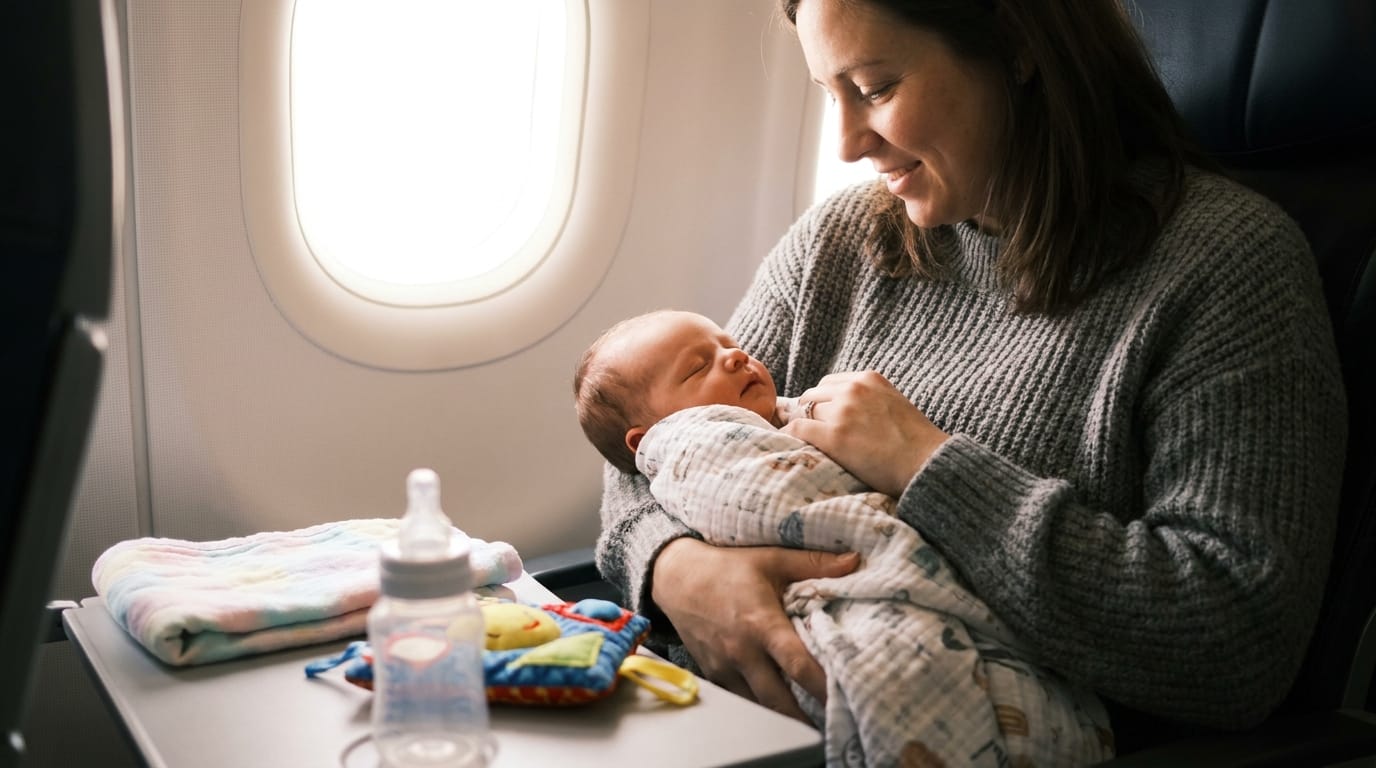
If you are frantically searching the internet for the absolute best tips for traveling with newborn on airplane, take a deep breath because you have come to the exact right place. I know exactly how you are feeling right now a mix of excitement for your trip and sheer terror at the thought of taking a tiny, unpredictable human onto a metal tube in the sky.
Trust me, I have been there, and I promise you that it is entirely possible to survive and even enjoy your flight.
Flying with a tiny baby feels like a monumental task, especially if you are a first-time parent. You are probably worried about the crying, the ear pain, the diaper blowouts, and the judgmental stares from other passengers.
But here is the good news: newborns are actually incredibly portable! Because they sleep so much, traveling with them is often much easier than traveling with an energetic toddler.
Grab a cup of coffee (or tea!), sit back, and let’s walk through this together. I am going to share everything you need to know to make your journey as smooth as silk.
Pre-Flight Preparation: Setting Yourself Up for Success
The secret to a successful flight with a baby starts weeks before you even pack your bags. Preparation is your best friend when it comes to keeping your stress levels low.
First and foremost, you need to get clearance from your pediatrician. Most airlines allow babies to fly after they are 7 to 14 days old, but your doctor knows your baby’s health best.
Once you get the green light, it is time to book your tickets. This step is crucial for a comfortable journey.
Choosing the Right Flights
- Book direct flights whenever possible: The fewer takeoffs and landings, the better. These are the times when your baby’s ears are most likely to bother them.
- Time it right: Try to book flights that align with your baby’s natural sleep schedule. Red-eye flights or flights during their longest nap time can be a lifesaver.
- Avoid tight layovers: If you must have a layover, give yourself at least two to three hours. You do not want to be sprinting across a massive terminal with a baby strapped to your chest.
Seating Arrangements
When booking, try to reserve the bulkhead seats. These are the seats at the very front of a cabin section with a wall in front of them.
Why are they so important? Because this is where the airline can attach a bassinet!
Most long-haul flights offer complimentary bassinets that clip onto the bulkhead wall. You will need to call your airline immediately after booking to reserve one, as they are available on a first-come, first-served basis.
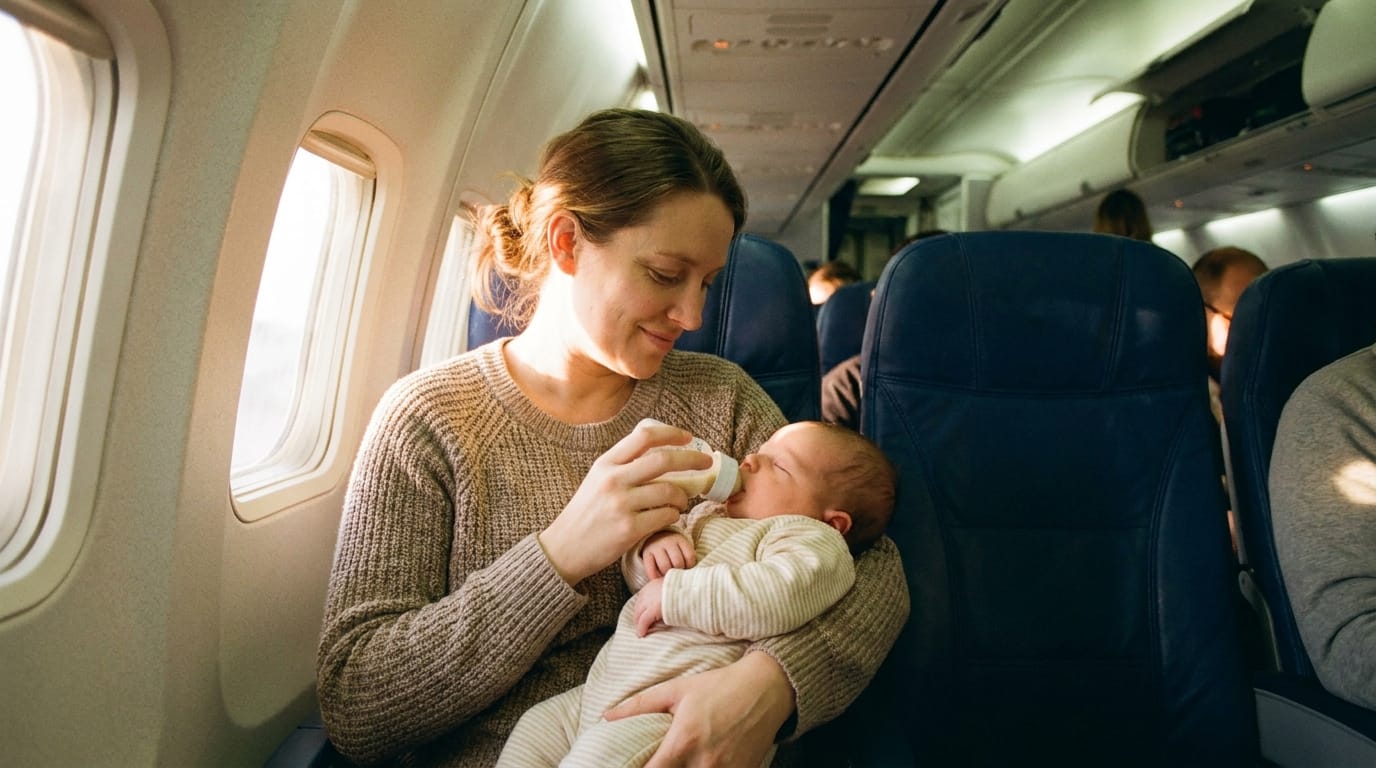
Essential Tips for Traveling with Newborn on Airplane
Now, let’s talk about the most critical part of your journey: the packing list. When you are looking for essential tips for traveling with newborn on airplane, packing smartly is always at the top of the list.
You want to bring enough to be prepared for any disaster, but not so much that you are struggling under the weight of your own bags.
Your diaper bag needs to be a Mary Poppins bag of wonders. Let’s break down exactly what needs to go inside.
The Ultimate Diaper Bag Checklist
- Diapers: Pack one diaper for every hour of your total travel time, plus a few extras just in case of delays.
- Wipes: Bring a brand-new, full pack of wipes. You will use them for diaper changes, wiping down tray tables, and cleaning your own hands.
- Changing Pad: A foldable, wipeable changing pad is an absolute must for those tiny airplane lavatories.
- Wet Bags: Bring several plastic bags or reusable wet bags to store soiled clothes and dirty diapers.
- Extra Outfits for Baby: Pack at least three extra outfits for your baby. Zip-up sleep-n-plays are the best because they are cozy and easy to change.
- An Extra Outfit for YOU: This is a rookie mistake you only make once! If your baby has a blowout or spits up all over you, you will desperately want a fresh shirt.
- Blankets: Airplanes get freezing cold. Bring a cozy blanket to keep your little one warm and comfortable.
Feeding Essentials
Whether you are nursing, formula-feeding, or exclusively pumping, you need to have a solid plan.
If you are formula-feeding, measure out your powder into dispensers ahead of time. Bring extra bottled water or ask the flight attendants for warm water when you board.
If you are nursing, wear comfortable, nursing-friendly clothing. A lightweight nursing cover can also double as a blanket or a canopy to block out overhead lights.
Navigating the Airport Like a Pro
The day of the flight has arrived. You have packed your bags, you have double-checked your passports, and you are ready to head to the airport.
Getting through the airport with a baby requires a bit of strategy, but once you know the rules, it is a breeze.
Babywearing is a Game Changer
One of the most practical pieces of advice I can give you is to use a baby carrier. Babywearing keeps your hands free to handle luggage, hand over passports, and grab your boarding passes.
Most babies love the closeness of a carrier, and the motion of you walking through the terminal will often lull them right to sleep.
You can actually wear your baby right through the security metal detectors in most airports, which saves you the hassle of taking them in and out of a stroller.
Handling Security (TSA) with Baby Liquids
A lot of parents panic about bringing milk or water through security, but you really do not need to worry.
The standard liquid rules (like the 3.4-ounce limit) do not apply to baby food, breastmilk, or formula. You are allowed to bring reasonable quantities of these items.
- Declare it: As soon as you get to the security belt, tell the agent that you have baby milk or water.
- Separate it: Take the liquids out of your bag and place them in a separate bin.
- Extra screening: The agents will likely need to test the liquids. They usually do this by waving a small piece of paper over the open bottle it is quick, safe, and painless.
Gate Checking Your Gear
You do not need to check your stroller and car seat at the main ticketing desk unless you want to. Most airlines allow you to check these items right at the boarding gate for free.
This means you can use your stroller to carry your heavy bags (or your baby!) all the way through the airport.
Just ask the gate agent for a “gate check tag” before boarding begins. When you scan your ticket to board, you simply fold up the stroller, leave it at the end of the jet bridge, and it will be waiting for you when you step off the plane at your destination.
Life-Saving Tips for Traveling with Newborn on Airplane: In-Flight Strategies
You have made it onto the plane! This is where the real adventure begins. Navigating the actual flight is where you will need to put all those tips for traveling with newborn on airplane to good use.
The first thing you should do when you find your seat is wipe everything down. Use antibacterial wipes to clean the tray table, armrests, seatbelts, and window shades.
Babies touch everything and then put their hands in their mouths, so starting with a clean environment gives you great peace of mind.
Mastering Takeoff and Landing
The biggest challenge during a flight is the change in cabin air pressure, which can cause severe pain in a baby’s tiny ears.
Because babies do not know how to intentionally pop their ears by yawning or chewing gum, they need your help.
The absolute best way to help them is by making sure they are swallowing during takeoff and landing.
- Feed them: Nurse your baby or offer a bottle right as the plane starts roaring down the runway.
- Use a pacifier: If your baby is not hungry, vigorously sucking on a pacifier works just as well.
- Time it right: Don’t start feeding them too early while you are just taxiing around the runway. Wait until the plane is actively accelerating for takeoff.
Managing Diaper Changes at 30,000 Feet
Airplane bathrooms are comically small, and changing a baby in one feels like an extreme sport.
Before you head to the lavatory, ask a flight attendant which bathroom has the changing table (they usually fold down from the wall above the toilet).
Do not bring your massive, bulky diaper bag into the tiny bathroom. Instead, create small “diaper kits” in ziplock bags before your trip.
Put one diaper, a small stack of wipes, and a disposable bag into a ziplock. When it is time for a change, just grab that little kit and your baby, leaving the heavy bag at your seat.
Handling the Tears: What to Do If Your Baby Cries
Let’s address the elephant in the room: the fear of your baby crying uncontrollably while a hundred strangers stare at you.
First, remember this golden rule: You have a right to be there. Babies are allowed on airplanes, and crying is their only way of communicating.
If your baby starts to fuss, do not panic. Your baby can feel your anxiety, so staying calm is the most important thing you can do.
Quick Soothing Techniques
- Change the scenery: Stand up and walk up and down the aisles. The movement and the change of environment often calm a fussy baby instantly.
- Use white noise: The airplane is naturally loud, which actually acts as a giant white noise machine. If that is not enough, download a white noise app on your phone and hold it near your baby’s ear.
- Distraction: Bring a few brand-new, silent toys. High-contrast soft books, crinkle toys, or even just letting them play with a plastic airline cup can work wonders.
Most passengers are incredibly sympathetic. They have been in your shoes or they are just wearing noise-canceling headphones anyway. Focus entirely on your baby and ignore any perceived judgment. You are doing a great job!
After the Flight: Ensuring a Smooth Arrival
Congratulations, you have landed! The hardest part is officially over.
When the seatbelt sign turns off, do not rush to jump up. Let the impatient passengers exit first. Take your time packing up your bags, finding all the pacifiers that dropped under the seat, and calmly gathering your things.
Collecting Your Gear
As you exit the plane, remember to wait in the jet bridge for your gate-checked stroller and car seat. Sometimes it takes the baggage handlers a few minutes to bring them up from the cargo hold.
Once you have your stroller, you can load everything up and stroll triumphantly toward baggage claim.
Adjusting to a New Environment
Traveling takes a toll on tiny bodies. Your baby might be a bit out of sorts for the first 24 to 48 hours after arriving at your destination.
Give them (and yourself!) plenty of grace. Stick to their routine as much as possible, but be flexible if they need an extra nap or an extra feeding.
If you have crossed time zones, expose your baby to plenty of natural sunlight during the day to help reset their internal clock.
Final Thoughts and Moving Forward
Traveling with a little one might seem incredibly intimidating at first glance, but implementing these smart tips for traveling with newborn on airplane will make a world of difference.
It is completely normal to feel nervous, but I promise you that the anticipation is almost always worse than the actual flight.
You are going to make wonderful memories on this trip, and getting there is just the first little hurdle. Be prepared, stay organized, pack extra wipes, and most importantly, give yourself some grace.
You are an amazing parent, and you have totally got this!