The Ultimate Guide: How to Clean a Baby Play Mat Safely and Effectively
As a parent, you quickly realize that your little one’s favorite spot can get messy fast. Knowing exactly how to clean a baby play mat is essential for keeping your child’s play area safe, hygienic, and looking brand new.
Babies spend countless hours rolling, crawling, and playing on these mats every single day. Along with the fun comes drool, spilled milk, food crumbs, and sometimes even diaper leaks.
If you leave these spills unattended, they can quickly turn into a breeding ground for harmful bacteria. That is why having a solid cleaning routine is so important for your family’s health.
In this comprehensive guide, we will walk you through everything you need to know about play mat maintenance. You will learn the best methods, the safest products, and expert tips to make the cleaning process a breeze.
Let’s dive into the ultimate routine to keep your little one’s play space perfectly pristine!
Why Knowing How to Clean a Baby Play Mat is Crucial
You might wonder why a quick wipe-down isn’t always enough for your child’s play area. The truth is, a play mat is like a magnet for household dust, pet dander, and microscopic germs.
Because your infant’s immune system is still developing, they are much more vulnerable to these invisible threats. Every time they put their hands in their mouth after touching the mat, they risk ingesting bacteria.
Learning how to clean a baby play mat properly ensures you remove deep-seated grime, not just surface dirt. It protects your infant from potential allergies, skin irritations, and common illnesses.
Furthermore, proper maintenance significantly extends the lifespan of the mat itself. Regular cleaning prevents permanent discoloration and material degradation, saving you money in the long run.
Ultimately, a clean play area gives you peace of mind. You can relax knowing your little explorer is navigating a safe and sanitary environment.
Understanding Different Play Mat Materials
Before you grab a sponge and start scrubbing, you need to identify what your mat is made of. Different materials require entirely different cleaning approaches to avoid accidental damage.
Using the wrong cleaning agent on the wrong material can ruin the texture or cause the colors to bleed. Let’s break down the most common types of mats and how they react to cleaning.
EVA Foam Interlocking Mats
Foam puzzle mats are incredibly popular because they offer great cushioning for unexpected tumbles. However, the textured surface of EVA foam is notorious for trapping dirt and liquid spills.
Because foam is slightly porous, it can absorb strong odors and harsh chemical cleaners. Therefore, it is best to stick to mild, non-toxic soap solutions when washing foam pieces.
Fabric and Cotton Play Mats
Fabric mats are soft, cozy, and often feature built-in sensory toys or arches. The biggest advantage of fabric mats is that most of them are entirely machine-washable.
However, you must always check the manufacturer’s care label before tossing them into the laundry. Using a gentle cycle with cold water is usually the safest bet to prevent shrinkage.
Polyurethane (TPU) and Silicone Mats
Premium play mats are often made from non-toxic TPU or food-grade silicone. These materials are highly durable, completely waterproof, and incredibly easy to wipe down.
They do not absorb liquids, making them highly resistant to mold, mildew, and stubborn stains. A simple damp cloth is usually enough for daily maintenance on these premium surfaces.
Step-by-Step Guide: How to Clean a Baby Play Mat
Now that you know your materials, it is time to get down to the actual cleaning process. This step-by-step method works wonderfully for most standard foam and TPU play mats.
Follow these instructions to ensure you remove every trace of dirt without damaging the material.
Step 1: Gather Your Cleaning Supplies
Preparation is key to making the cleaning process fast and efficient. You want to use gentle, non-toxic items that are perfectly safe for your little one.
You will need a soft microfiber cloth, a gentle sponge, and a bucket of warm water. For the cleaning agent, mild dish soap or a mixture of white vinegar and water works perfectly.
Avoid using abrasive scrub brushes or steel wool under any circumstances. These rough tools will easily scratch the surface and ruin the protective layer of the mat.
Step 2: Remove Loose Dirt and Debris
Before applying any liquid, you need to get rid of the dry mess. Crumbs, hair, and dust will just turn into a muddy paste if you get them wet immediately.
Use a soft-bristled broom to gently sweep the surface of the mat. Alternatively, you can use a handheld vacuum, but make sure the suction isn’t too strong.
If you are cleaning interlocking foam tiles, take them apart and shake them out outside. Dirt loves to hide in the puzzle-piece crevices where the tiles connect.
Step 3: Spot Cleaning for Tough Stains
Spills happen, and sometimes they leave behind stubborn, sticky residues. It is important to tackle these spots directly before you wash the entire mat.
Spray your gentle cleaning solution directly onto the stained area and let it sit for a minute. This allows the cleaner to break down the grime without requiring aggressive scrubbing.
Gently rub the spot in a circular motion using your damp microfiber cloth. For sticky food remnants, a soft sponge can help lift the residue away safely.
Dealing with Organic Stains
Spit-up and diaper leaks require immediate attention to prevent nasty odors from setting in. An enzyme-based natural cleaner is fantastic for breaking down organic proteins quickly.
Removing Marker and Crayon Marks
If your toddler got creative with a pen, do not panic just yet. A tiny drop of rubbing alcohol on a cotton ball can gently lift ink off most non-porous mats.
Step 4: Deep Cleaning the Entire Mat
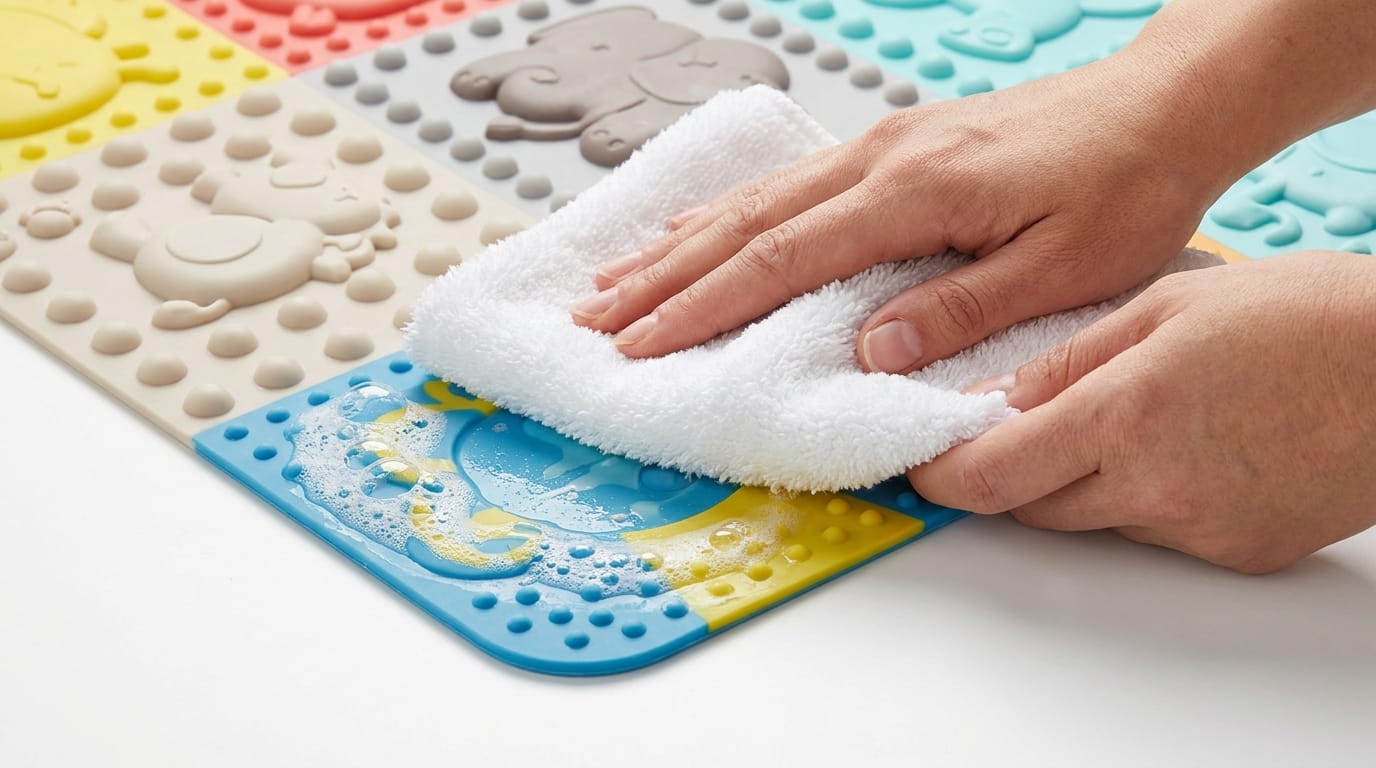
Once the stubborn spots are gone, it is time to wash the whole surface. If you have a one-piece waterproof mat, simply mop it with your warm, soapy water.
For foam puzzle mats, the best approach is to wash them in your bathtub. Fill the tub with warm water, add a few drops of mild soap, and submerge the tiles.
Use a soft cloth to wipe down both the front and back of each puzzle piece. Pay special attention to the interlocking edges, as this is where dust and spilled milk accumulate.
Step 5: Rinsing Away the Soap
Leaving soap residue on the mat can make it slippery and dangerous for your crawling infant. Plus, dried soap can attract even more dirt over time.
If you washed the mat in the tub, drain the soapy water and rinse each piece under the showerhead. Make sure the water runs completely clear before you stop rinsing.
For one-piece mats, use a fresh, damp cloth soaked only in clean water. Wipe the entire surface down again to remove any lingering suds.
Step 6: Drying the Play Mat Properly
Drying is perhaps the most critical step in learning how to clean a baby play mat. If you put a damp mat back on the floor, mold and mildew will quickly grow underneath it.
Use a clean, dry towel to wipe away the excess moisture from the surface immediately. Then, prop the mat up against a wall or lay it over a drying rack in a well-ventilated room.
Never place a foam or TPU mat in direct, harsh sunlight to dry. Extreme heat and UV rays can cause the vibrant colors to fade and the material to warp or crack.
Natural vs. Chemical Cleaners: What is Safe?
When deciding how to clean a baby play mat, the choice of cleaning product is vital. Traditional household surface cleaners often contain harsh chemicals like ammonia, bleach, and synthetic fragrances.
These chemicals can leave behind toxic residues that your infant might ingest or absorb through their sensitive skin. Strong fumes can also irritate their tiny, developing lungs.
It is always highly recommended to stick to natural, plant-based cleaning solutions. White vinegar, baking soda, and gentle castile soap are excellent, inexpensive, and entirely safe alternatives.
A simple mix of equal parts distilled water and white vinegar creates a powerful, natural antibacterial spray. The vinegar smell dissipates completely once the mat dries, leaving it fresh and sanitized.
If you prefer store-bought options, always look for cleaners specifically formulated for nursery use. Check the labels to ensure they are free from parabens, phthalates, and artificial dyes.
How Often Should You Clean Your Child’s Play Mat?
Establishing a consistent cleaning schedule keeps the workload manageable and the mat hygienic. You should break your routine down into daily, weekly, and monthly tasks.
Daily Maintenance Routine
Every evening, once your child has gone to bed, do a quick visual inspection of the play area. Pick up any loose toys, crumbs, or obvious dirt.
Use a damp cloth or a baby-safe wipe to clean up any small spills from the day. This simple two-minute habit prevents sticky spots from hardening overnight.
Weekly Cleaning Routine
Once a week, you should perform a more thorough wipe-down of the entire surface. Sweep or vacuum the mat to remove dust and pet hair that has settled.
Wipe the entire front surface with your vinegar and water solution or mild soapy water. This weekly refresh keeps bacterial growth at bay and maintains the mat’s bright appearance.
Monthly Deep Clean
Every three to four weeks, it is time for a comprehensive deep clean. If you have puzzle mats, this means taking them apart and scrubbing them in the bathtub.
Don’t forget to clean the floor underneath the play mat during this monthly deep clean. Dust and moisture can get trapped under the mat, potentially damaging your hardwood or laminate floors.
Expert Tips to Keep the Play Mat Cleaner for Longer
Cleaning is important, but preventing the mess in the first place is even better! With a few simple house rules, you can drastically reduce how often you need to scrub the mat.
First, implement a strict “no shoes” policy for anyone stepping into the play area. Shoes track in dirt, harmful bacteria, and even toxins from the street straight onto your infant’s safe zone.
Second, try to keep messy snacks and meals confined to the high chair or kitchen. If you do allow snacks on the mat, stick to dry foods that are easy to vacuum up, like crackers.
Third, keep household pets away from the play area as much as possible. Dogs and cats shed hair, carry outdoor germs, and their sharp claws can easily puncture foam mats.
If you want to protect your baby from floor drafts, consider placing a soft blanket over the mat. You can simply toss the blanket in the washing machine, saving the mat from direct daily wear and tear.
Dealing with Mold and Mildew
If a play mat is left damp or if spills seep under the edges, mold can develop. Mold is incredibly dangerous for infants and can cause severe respiratory issues and allergic reactions.
If you spot tiny black spots or notice a musty smell, you must act immediately. Mix a paste of baking soda and water, apply it to the affected area, and let it sit for an hour.
Gently scrub the spot with an old toothbrush, then wipe it clean with white vinegar to kill the remaining spores. Make absolutely sure the mat is 100% bone-dry before placing it back on the floor.
If the mold has deeply penetrated the foam and cannot be scrubbed away, it is unfortunately time to discard it. Your child’s health is never worth risking over a ruined play accessory.
When is it Time to Buy a New Play Mat?
Even with the most meticulous cleaning routine, no play mat will last forever. Constant use, frequent washing, and normal wear and tear will eventually take their toll.
If your foam puzzle mat has missing chunks, peeling printed layers, or deep scratches, it is a hazard. Babies can easily pick off loose pieces of foam and put them in their mouths, creating a choking risk.
If the mat has lost its cushioning or has persistent odors that simply will not wash out, it is time for an upgrade. A fresh, clean mat provides better support for crawling and walking safely.
When you are ready to replace it, you can easily find a massive variety of high-quality, non-toxic options on amazon. Look for mats with excellent customer reviews regarding durability and ease of cleaning.
Investing in a premium, seamless TPU mat might cost a bit more initially, but it saves hours of scrubbing. It is a worthwhile investment for the safety and hygiene of your home.
Frequently Asked Questions (FAQs)
Can I put my foam play mat in the washing machine?
No, you should never put EVA foam interlocking mats in a washing machine or dryer. The aggressive spinning will warp the foam, and the heat will melt or severely distort the pieces.
Are Clorox or bleach wipes safe to use?
It is strongly advised to avoid bleach or harsh chemical wipes on baby mats. These products leave toxic residues behind that can irritate your baby’s skin or be ingested when they chew on their toys.
Can I use a steam mop on my play mat?
Steam mops use extremely high heat, which can easily melt, warp, or unglue the layers of a foam or polyurethane mat. Always stick to warm water and manual wiping to preserve the mat’s integrity.
How do I remove deep indentations from heavy furniture?
If a heavy toy or small chair left an indent on a foam mat, you can try to fix it carefully. Place a damp towel over the dent and gently iron it on a very low heat setting for just a few seconds.
Why does my new play mat smell out of the box?
Many new foam and plastic mats undergo “off-gassing” when first unpackaged, releasing a chemical smell. Wipe the mat down with mild soap and let it air out in a well-ventilated room or shaded porch for 24-48 hours before use.
Conclusion
Figuring out exactly how to clean a baby play mat does not have to be a stressful or overly complicated chore. With the right natural supplies and a little bit of consistency, you can easily maintain a pristine environment.
Remember that regular, daily wipe-downs will save you from having to do exhausting, heavy scrubbing later on. Always prioritize gentle, non-toxic cleaning agents to ensure your little one’s delicate skin remains perfectly safe.
By following the simple steps outlined in this guide, your child’s play area will remain a vibrant, clean, and healthy space. You will not only extend the life of your mat but also grant yourself complete peace of mind.
Now that you know the secrets to a spotless play area, it is time to put them into action! Grab your microfiber cloth, mix up some natural vinegar spray, and give that mat the refreshing clean it deserves today.