The Ultimate Guide : How to Clean Baby Poop Out of Clothes Without Stress
If you are a new parent, you have probably frantically searched for how to clean baby poop out of clothes after a major diaper blowout. Let’s be honest, dealing with these messy explosions is an inevitable part of parenthood.
However, those bright yellow or dark brown stains do not have to permanently ruin your little one’s adorable wardrobe.
With the right techniques, a little patience, and some household staples, you can save those tiny onesies from the trash bin.
In this comprehensive guide, we will walk you through the absolute best, mom-approved methods to tackle these stubborn stains. We will cover everything from immediate actions to deep-cleaning secrets.
Why Are Diaper Blowout Stains So Stubborn? How to clean baby poop out of clothes ?
Before we dive into the solutions, it helps to understand exactly what you are up against.
The composition of your infant’s waste changes dramatically depending on their diet, and this affects how the stain binds to fabric.
Breastfed vs. Formula-Fed vs. Solid Foods
If your little one is exclusively breastfed, you are likely dealing with bright yellow, mustard-like stains. These stains are notoriously difficult to remove because they act almost like a natural dye.
Formula-fed infants tend to produce darker, thicker waste. These stains can be slightly easier to lift but still require immediate attention to prevent setting into the fibers.
Once your child starts eating solid foods, the texture and color change again. These messes often contain more complex proteins and oils, requiring enzyme-based cleaners to fully break them down.
No matter the diet of your baby, the golden rule remains the same: treat the stain as quickly as possible.
The Immediate Response: What to Do Right Away
When a blowout happens, your first instinct might be to panic or throw the ruined garment straight into the garbage. Take a deep breath!
Acting quickly is the single most important factor in saving the clothing. Here is exactly what you need to do in the first few minutes.
Step 1: Remove the Excess Mess Carefully
Do not wipe or rub the stain! Rubbing will only push the mess deeper into the delicate fabric fibers.
Instead, use a solid object to gently scrape off the excess. A plastic spoon, a dull butter knife, or even a piece of sturdy cardboard works perfectly for this task.
Discard the solid waste into the toilet. The goal here is to leave only the stained fabric behind, minimizing what you actually have to wash.
Step 2: Flush with Cold Water Immediately
Once the excess is removed, head straight to the sink.
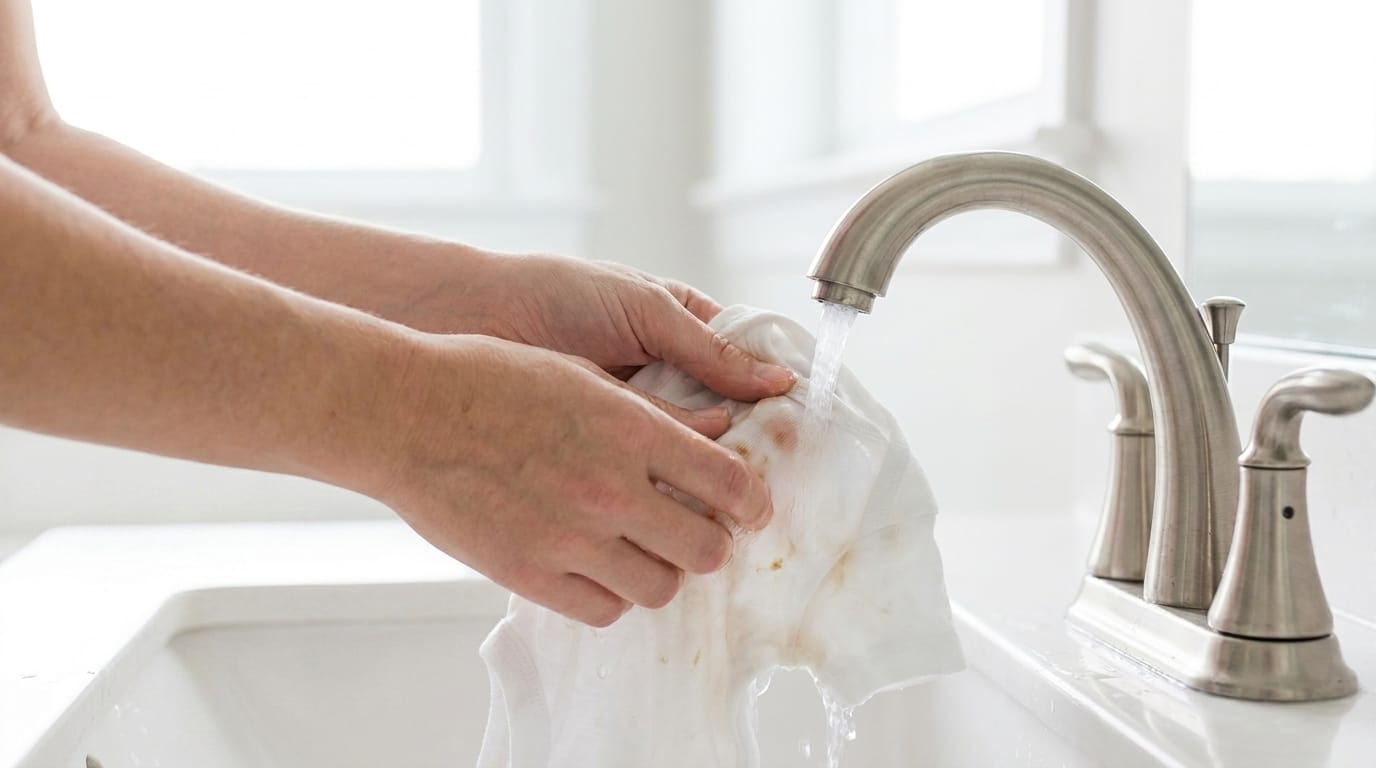
Always use cold water. This is a critical rule! Hot water will literally cook the proteins in the waste, permanently setting the stain into the fabric.
Hold the garment inside out under a strong stream of cold running water. Flushing the fabric from the back pushes the stain out of the fibers rather than forcing it deeper inside.
The Best Methods to Clean Stubborn Poop Stains
Now that you have completed the pre-treatment, it is time to tackle the actual discoloration.
Depending on what supplies you have on hand, you can choose from several highly effective methods.
Method 1: The Magic of Dish Soap and Baking Soda
This is a fantastic, gentle DIY method that utilizes products you probably already have in your kitchen.
Liquid dish soap is designed to cut through heavy grease and organic matter, making it surprisingly effective on diaper blowouts.
-
Squirt a generous amount of liquid dish soap directly onto the stained area.
-
Sprinkle a thick layer of baking soda over the dish soap.
-
Use an old, soft-bristled toothbrush to gently scrub the mixture into the fabric in a circular motion.
-
Let the paste sit on the stain for at least 15 to 30 minutes before rinsing.
Method 2: Enzyme-Based Stain Removers
For older, set-in stains, or messes from infants eating solid foods, enzyme cleaners are your best friend.
Enzymes literally digest the biological proteins and starches present in the waste, breaking them apart at a microscopic level.
You can easily find highly-rated enzymatic sprays by doing a quick search and ordering from amazon to keep in your laundry room.
Simply spray the affected area generously, rub the fabric together to work the liquid in, and let it sit for the time recommended on the bottle (usually 15-20 minutes) before washing.
Method 3: The Natural Power of White Vinegar
White vinegar is a miracle worker in the laundry room. It is a mild acid that helps break down stains and neutralize odors without harsh chemicals.
Mix one part distilled white vinegar with one part cold water in a spray bottle. Saturate the stain completely with this solution.
Let it sit for about 10 minutes. The vinegar will help loosen the organic bonds of the stain, making it much easier for your laundry detergent to wash it away.
Method 4: Hydrogen Peroxide for Tough Discoloration
If you are dealing with white onesies or light-colored fabrics, hydrogen peroxide acts as a gentle, color-safe bleach.
Be cautious when using this on dark or brightly colored clothes, as leaving it on too long can cause fading.
Apply a small amount of 3% hydrogen peroxide directly to the stain. You will likely see it start to bubble—this means it is working to lift the organic matter!
Let it sit for 5 to 10 minutes, then rinse thoroughly with cold water.
The Secret Weapon: Harnessing the Power of the Sun
If you have tried everything and a faint yellow shadow still remains, do not put that garment in the dryer!
There is one final, completely free, and incredibly effective step you can take: sun bleaching.
How Sun Bleaching Works
The ultraviolet (UV) rays from the sun act as a powerful, natural bleaching agent. This trick has been used by parents for generations to save stained cloth diapers and delicate baby clothes.
After washing the garment, simply lay it out flat in direct sunlight while it is still wet.
Leave it outside for a few hours. When you come back, you will be amazed to find that the stubborn yellow stain has completely vanished.
This method is completely safe for delicate infant skin since it involves zero harsh chemicals.
Step-by-Step Washing Machine Routine
Once you have pre-treated the stain using one of the methods above, it is time to run the clothing through the washing machine.
Doing this correctly ensures the stain is fully eradicated and the garment is safe to wear again.
Choose the Right Setting
Always wash soiled infant clothing separately from your regular household laundry to prevent cross-contamination.
Select a heavy-duty cycle on your washing machine. If your machine has a specific “sanitize” or “extra rinse” feature, now is the time to use it.
Temperature Matters
While you must use cold water for the initial rinse, you can switch to warm water for the actual machine cycle.
Warm water helps activate the laundry detergent to clean the fabric deeply. However, avoid boiling hot water unless the care tag explicitly allows it.
Selecting a Safe Detergent
Infant skin is incredibly delicate and prone to irritation, rashes, and eczema.
Always opt for a hypoallergenic, fragrance-free, and dye-free liquid laundry detergent. Avoid heavy commercial fabric softeners, as these leave chemical residues on the fibers.
How to Handle Old, Set-In Poop Stains
We have all found a soiled onesie buried at the bottom of the diaper bag days after a blowout occurred.
When a stain has dried and set into the fabric, standard washing will not be enough. You need to implement a deep-soak strategy.
The Oxi-Soak Method
Oxygen-based bleach powders (like OxiClean) are phenomenal for reviving ruined clothes.
Fill a basin or bucket with warm water and dissolve a scoop of oxygen-bleach powder into it. Ensure the powder is fully dissolved before adding the clothes.
Submerge the stained garments completely in the solution. Let them soak for a minimum of 6 hours, or ideally, overnight.
By the next morning, the oxygen bubbles will have broken down the dried proteins. Rinse the items thoroughly and launder them as usual.
What NOT to Do When Treating Baby Clothes
Knowing what to avoid is just as important as knowing what to do. Making the wrong move can permanently ruin an outfit.
-
Never Use Hot Water First: As mentioned earlier, hot water bakes protein stains directly into the fabric.
-
Avoid Chlorine Bleach: Chlorine bleach is far too harsh for an infant’s sensitive skin and will break down fabric fibers over time.
-
Do Not Use the Dryer Prematurely: Never put a stained item into the dryer. The intense heat of the dryer will permanently set the stain, making it impossible to remove later.
-
Don’t Vigorously Scrub: Scrubbing delicate cotton blends too hard will cause pilling and weaken the fabric structure.
Pro Tips to Prevent Diaper Blowouts
While knowing how to clean up the mess is essential, preventing the blowout in the first place is even better!
Here are some quick tips to minimize the chances of a messy explosion happening.
Check the Diaper Size
The number one cause of blowouts is an improperly sized diaper.
If you are experiencing frequent leaks up the back or out the legs, it is almost certainly time to size up. A larger diaper provides a higher back and more absorbency.
Ensure the Ruffles are Out
When putting on a disposable diaper, always run your fingers around the leg gussets.
Ensure the little ruffles are pulled outwards, not tucked inside. These ruffles act as the primary barrier against explosive leaks.
Consider a Diaper Cover
If you know your little one is prone to massive messes, consider putting a reusable, waterproof cloth diaper cover over their disposable diaper.
This provides a sturdy second line of defense, keeping the mess contained and saving the outfit.
Frequently Asked Questions (FAQs)
Can I wash poopy baby clothes with other laundry?
It is highly recommended to wash heavily soiled items separately. This prevents bacteria and unpleasant odors from transferring to your towels, bedding, or adult clothing.
Does breastmilk poop stain permanently?
It can if left untreated, due to its bright yellow pigmentation. However, by rinsing with cold water immediately and using the sun-bleaching method, you can completely remove these stains.
Are chemical stain removers safe for newborns?
Harsh chemical removers can leave irritating residues behind. It is best to stick to natural methods like baking soda, vinegar, dish soap, or specific enzyme cleaners formulated for sensitive skin.
What do I do if a stain is completely dried?
Do not panic. You will need to rehydrate the stain. Soak the garment overnight in a mixture of cool water and an oxygen-based bleach powder before attempting to scrub or wash it.
How do I get the bad smell out of the clothes?
If an odor lingers after washing, vinegar is your solution. Add half a cup of distilled white vinegar to the rinse cycle of your washing machine to neutralize stubborn bacterial odors.
Conclusion: You Can Save Those Outfits!
Figuring out how to clean baby poop out of clothes does not have to be a nightmare scenario that ends with ruined outfits and frustration.
By acting swiftly, strictly using cold water for the initial rinse, and keeping gentle household cleaners like dish soap and baking soda on hand, you are well-equipped to handle any blowout.
Remember that patience is key—sometimes an overnight soak or an afternoon in the bright sunshine is all it takes to make that adorable onesie look brand new again.
Call to Action: Did you find these laundry tips helpful? Bookmark this page for the next time a blowout catches you off guard, and be sure to share this ultimate guide with other new parents who might be struggling with stubborn laundry stains!