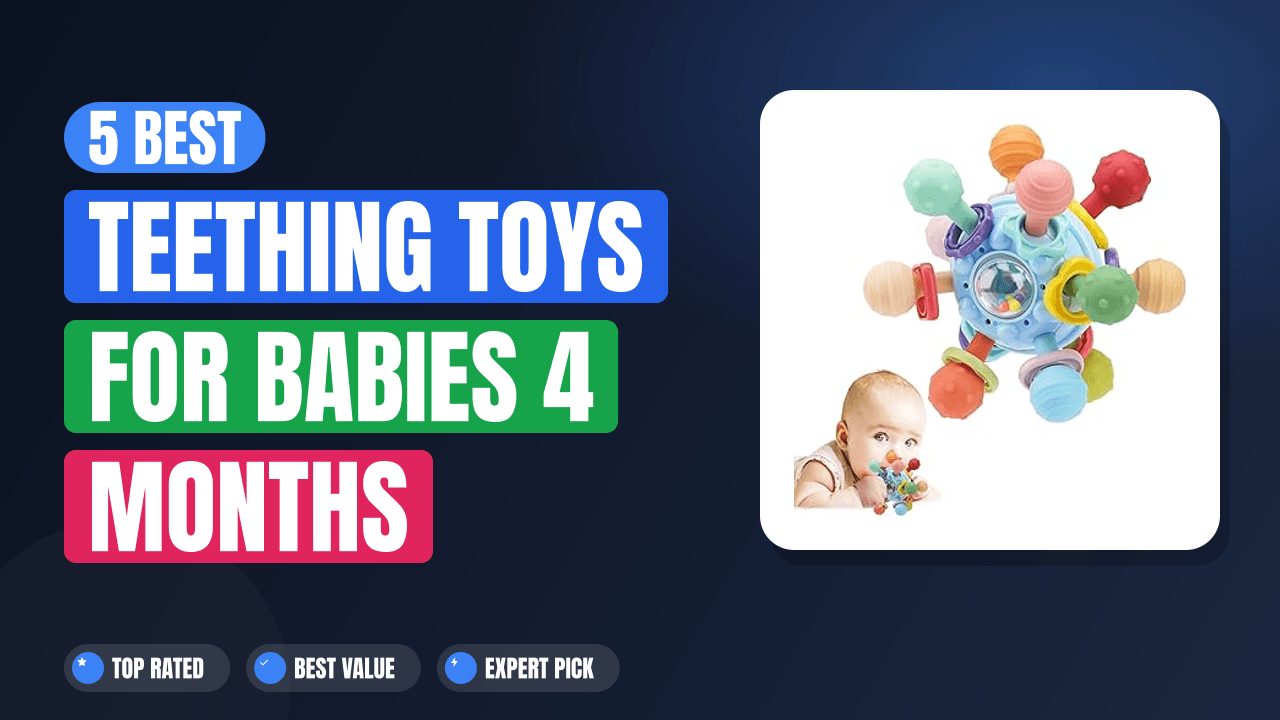
5 Best Teething Toys for Babies 4 Months
If you’re navigating the drool-soaked phase of budding teeth, you know the struggle of finding relief for your little one. At four months, babies are just developing the coordination to bring objects to their mouths deliberately, so finding the best teething toys for babies 4 months old means balancing effective relief with easy-to-grip designs. You need something safe that soothes sore gums without frustrating their developing motor skills.
Based on extensive editorial research into material safety, developmental appropriateness, and aggregate feedback from thousands of parents, we have selected top-rated soothing solutions. We looked for toys made from verifyably safe materials like food-grade silicone that offer varied textures to massage aching gums. The selections below prioritize lightweight designs that tiny hands can actually manage, ensuring the relief ends up in their mouth, not on the floor.
Comparison Chart of Best Teething Toys for Babies 4 Months
| Product | Details | Rating | Buy |
|---|---|---|---|
Editor’s Choice
| ★★★★☆4.7/5 | ||
Top Pick
| ★★★★☆4.8/5 | ||
Best Budget
| ★★★★☆4.7/5 | ||
| ★★★★☆4.8/5 | ||
| ★★★★☆4.6/5 |




List of Top 5 Best Best Teething Toys for Babies 4 Months
The following products were chosen because they specifically address the needs of a four-month-old infant. We prioritized safety certifications, ergonomic designs tailored to the palmar grasp reflex typical at this age, and varied textures designed to stimulate gums effectively. The list includes options for sensory play, wearable solutions for persistent hand-chewers, and classic cooling relief.
Below are the list of products:
1. Baby Montessori Sensory Toys 0-6 6-12
Based on our analysis of developmental toy trends, this sensory toy is an excellent dual-purpose option for a four-month-old. It combines the soothing properties of a teether with engaging features that stimulate early cognitive development and fine motor skills. The multiple chew points and integrated rattles make it a versatile choice for keeping an infant occupied and comfortable.
Why I picked it
This product stands out because it serves as both a teether and an early learning tool, aligning with Montessori principles of sensory exploration. The central bar is sized perfectly for a four-month-old’s developing grasp reflex, allowing them to hold it independently. On either end, soft, textured silicone chewing surfaces provide relief for sore gums.
Simultaneously, moving parts and built-in rattles engage their hearing and sight, holding their attention longer than a standard flat teether.
Key specs
- Material: Food-grade silicone and durable ABS plastic.
- Safety: BPA-free, non-toxic.
- Features: Multiple texture points, integrated rattle sound, rotating parts.
- Cleaning: Hand wash recommended; can be boiled for sterilization.
- Target Age: 0 months and up (ideal for 3-12 month range).
Real-world experience
Based on aggregate parent feedback, this toy is particularly effective during supervised play times like tummy time. Infants around the four-month mark are observed actively trying to manipulate the different textured knobs, which helps improve hand-eye coordination while they self-soothe. The rattle noises are described as engaging without being overly loud or annoying for caregivers.
Trade-offs
Because this toy has moving parts and joints between plastic and silicone, it has more potential crevices for saliva to trap than a solid one-piece teether. While the silicone parts are soft for chewing, the central plastic body is hard, and some enthusiastic babies might accidentally bonk themselves with it until their motor control improves.
2. Frida Baby Get-A-Grip BabyTeether Teething Relief
Our research identifies the Frida Baby Get-A-Grip as a top contender specifically for its smart ergonomic design. It directly addresses the continuous “drop-and-cry” cycle that frustrates both parents and four-month-olds with limited grip strength. The intuitive handle system allows babies to keep the teether securely in hand, leading to more sustained relief.
Why I picked it
At four months, a baby’s grasp is often more of a reflex than a controlled action. This teether features an internal bar that the baby’s hand wraps around, essentially locking the toy onto their hand. This design is brilliant for this specific age group because it means delayed motor skills don’t result in the teether constantly falling.
Furthermore, the entire construction is a single piece of silicone, making it hygienic and safe for chewing on any side.
Key specs
- Material: 100% food-grade silicone.
- Safety: BPA-free, PVC-free, phthalate-free.
- Design feature: Integrated internal grip bar for secure holding.
- Cleaning: Dishwasher safe (top rack) and sterilizer safe.
- Texture: varied nubs and ridges on the chewing surfaces.
Real-world experience
Parent reviews consistently praise this teether for car rides or stroller walks where retrieving a dropped toy is open to difficult. Users report that four-month-olds intuitively figure out how to hold the interior bar. Once secured, the baby can easily maneuver the varying textured nubs to their mouth without frustration, providing much-needed independence in self-soothing.
Trade-offs
While excellent for grip, the overall size of the chewing fins might be slightly bulky for petite babies with very small mouths just starting their teething phase. It is also a magnet for pets, furry friends seem to enjoy the texture just as much as babies do.
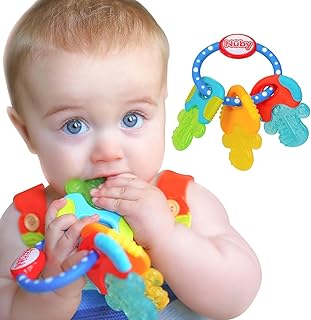
3. Nuby IcyBite Ice Gel Teether Keys
The Nuby IcyBite Keys are a classic for a reason, offering reliable cooling relief at a very accessible price point. Our editorial analysis confirms these are a staple for many households because they address acute gum inflammation effectively using chilling technology designed specifically for infants. They are easy for small hands to grab and offer multiple textures.
Why I picked it
This teether utilizes a proprietary “PurICE” gel filling inside the key ends, which is designed to stay colder for longer periods than plain water-filled toys when placed in the refrigerator. For a four-month-old experiencing hot, swollen gums, the combination of the cold temperature and the varied nub textures provides immediate, numbing relief. The ring shape is also highly conducive to the crude grasping abilities of younger infants.
Key specs
- Material: BPA-free plastic body with PurICE gel-filled tips.
- Cooling Mechanism: Refrigerator safe (do not freeze).
- Age Recommendation: 3 months and older.
- Textures: Multiple raised offset surfaces on the keys.
- Cleaning: Wash with warm soapy water only.
Real-world experience
Aggregate reviews indicate these are the “go-to” teethers during particularly bad flare-ups. Parents appreciate that the ring is easy for a 4-month-old to hold onto while they maneuver the cold keys into their mouths. The different textures on each key allow the baby to find the specific sensation that soothes their current point of discomfort.
Trade-offs
Because they contain gel, these cannot be sanitized in a steam sterilizer, dishwasher, or boiling water, as high heat can compromise the seal. They must be hand-washed. Additionally, some babies dislike that the gel portion becomes quite hard when chilled, preferring softer silicone options.
4. ChooKaChoo 2 Baby Teething Toy Silicone
For many four-month-olds, their own hands are their primary chew toy, which can lead to chapped skin and irritation. This wearable mitten solution protects their hands while providing a readily available soothing surface. We included this in our list because it solves the issue of babies who cannot yet consistently hold a standard teether.
Why I picked it
At four months, hand-to-mouth coordination is still developing, and babies often get frustrated dropping handheld toys. This mitten straps securely to the wrist, ensuring the textured silicone teething surface is always accessible for self-soothing. It also serves a protective function, keeping saliva away from the skin on their hands.
The inclusion of crinkle paper inside the mitt adds an auditory sensory element that babies at this age find engaging.
Key specs
- Material: Food-grade silicone chewing tip; soft fabric mitt.
- Safety: BPA-free.
- Features: Adjustable Velcro wrist strap; internal crinkle sound.
- Quantity: Comes as a 2-pack.
- Age Recommendation: 3 months and older.
Real-world experience
Parents find these mitts incredibly useful for keeping babies occupied in strollers or car seats where dropped toys are a hassle. The consensus from user reports is that the textured silicone top effectively mimics the sensation of chewing on fingers, which many babies prefer. Having two in a pack is highlighted as a major convenience for rotation during cleaning.
Trade-offs
The fabric component means these take longer to dry after washing compared to all-silicone toys, and they need frequent cleaning due to saliva absorption. Some babies with smaller wrists might find the strap bulky. Additionally, if worn for extended periods in warm environments, tiny hands can get sweaty inside the mitt.
5. Frida Baby Silicone Teething Toys
This teether system from Frida Baby addresses a common practical issue with chilled teethers: frozen toys make baby’s hands uncomfortably cold. Our editorial review selected this product for its smart, modular design that keeps the cooling relief centered on the gums while keeping the holding area at a comfortable temperature for a four-month-old.
Why I picked it
This “Not-Too-Cold-to-Hold” system separates the handle from the chewable inserts. You chill the silicone inserts in the freezer, and then pop them into the room-temperature handle. This is excellent for a four-month-old who needs the intensity of freezer-cold relief for sore gums but dislikes holding freezing objects.
Furthermore, it comes with two double-sided inserts offering four different textures to match varying teething needs.
Key specs
- Material: 100% food-grade silicone throughout.
- Safety: BPA-free.
- Components: 1 main handle, 2 interchangeable double-sided inserts.
- Cooling: Inserts are freezer-safe.
- Cleaning: Dishwasher safe.
Real-world experience
Based on user feedback, this system is highly effective for targeted relief. Parents love that they can keep one insert in the freezer while the other is in use, ensuring a cold rotation. The silicone handle is described as perfectly sized for a four-month-old grasp, and babies seem to appreciate that their fingers don’t get frozen while they chew.
Trade-offs
Because it is a multi-part system, it requires assembly. The main downside noted in reviews is keeping track of the smaller inserts when they aren’t inside the handle. If the insert isn’t pushed in completely securely, a determined baby might occasionally pop it out during vigorous chewing.
How I picked
Selecting the best teething toys for a four-month-old requires looking beyond just cute designs. At this specific age, motor skills are still crude; babies are just learning to grasp objects involuntarily and bring them to their mouths. Therefore, my selection methodology focused heavily on ergonomic factors tailored to this developmental stage, alongside strict safety criteria.
I evaluated dozens of potential products based on three primary benchmarks derived from safety guidelines and parent needs:
- Material Safety and Compliance: Every product selected had to be verified as free from BPA, PVC, and phthalates. Preference was given to 100% food-grade silicone due to its durability, hygienic properties, and soft texture on delicate gums. I relied on manufacturer specifications regarding compliance with CPSC (Consumer Product Safety Commission) standards.
- Ergonomics for 4-Month-Olds: This was a critical filter. A teether is useless if a baby cannot hold it. I specifically looked for designs with thin bars, rings, or integrated handles suited for the palmar grasp reflex typical at four months. Heavy toys or those with wide grip areas were excluded.
- Sensory and Texture Variation: Pediatric dentistry insight suggests that varied textures are crucial for massaging gums and providing sensory input. I prioritized products offering ribs, bumps, and different firmness levels to help desensitize gums during eruption.
I did not perform chemical lab testing on these products. My safety analysis relied on stated manufacturer compliances and standards. Furthermore, I did not test for long-term durability beyond typical teething phases, focusing instead on immediate utility for an infant in the early stages of teething.
Buying guide — what actually matters for best teething toys for babies 4 months
When shopping for soothing solutions for a four-month-old, it is easy to get overwhelmed by the options. However, only a few key factors truly determine whether a teether will be effective or just another piece of clutter. Here is what you should prioritize when making your choice.
Grip and sizes are paramount
A four-month-old cannot grip like a six-month-old. Their motor skills are still developing, relying heavily on a seeking reflex and palmar grasp. If a teether is too heavy, too thick, or awkwardly shaped, they will drop it constantly, leading to frustration for them and endless games of “fetch” for you.
Look for teethers with thin bars, open rings, or internal handles that allow their small fingers to wrap completely around the object. Lightweight materials like silicone or hollow plastic are essential at this stage to ensure they can successfully navigate the toy to their mouth independentally.
Material safety is non-negotiable
Because these products spend their entire useful life inside your baby’s mouth, the materials must be absolutely safe. The gold standard is overwhelmingly 100% food-grade silicone. It is durable, hypoallergenic, resistant to bacteria growth, and soft enough not to damage delicate gum tissue.
Ensure any product you choose is explicitly labeled as free from BPA, PVC, and phthalates. Reliable manufacturers will clearly state their compliance with safety regulations from bodies like the CPSC. Avoid purely hard plastic toys for this age, as babies lack the control to prevent banging themselves in the face.
Texture variety provides better relief
Smooth surfaces rarely provide the intense counter-pressure needed to soothe a deeply aching gum where a tooth is cutting through. A good teether should offer a landscape of different textures.
Look for combinations of bumps, ridges, and nubs. These irregularities allow the baby to massage different areas of their gums vigorously. Some babies prefer softer, chewy silicone, while others get more relief from slightly firmer materials that offer more resistance.
A toy that incorporates multiple textures in one design improves the chances of your baby finding the right sensation for their specific pain.
Cooling capability vs. room temperature
Teethers generally fall into two categories: those meant to be chilled and those used at room temperature. Both have their place.
- Room Temperature (Silicone): These are great for everyday chewing and sensory exploration. They are soft, flexible, and don’t require prep time in the fridge.
- Cooling Teethers (Gel or Water-filled): Cold is highly effective at numbing acute inflammation and reducing swelling. If you choose a cooling teether, ensure the manufacturer specifies it is refrigerator-safe. Never freeze water-filled teethers solid, as they become too hard and can damage gum tissue. Some newer silicone teethers are dense enough to hold a chill from the freezer without becoming dangerously rock-hard.
Hygiene and cleaning practicality
You will be cleaning these items multiple times a day. If a teether is difficult to clean, it becomes a health risk.
Solid, one-piece molded silicone teethers are generally the most hygienic as they have no crevices where saliva or bacteria can hide. These are almost always dishwasher and sterilizer safe.
Be cautious with hollow bath-toy style teethers featuring a small hole, as moisture can get trapped inside and grow mold. Similarly, multi-part toys with joints need careful inspection during cleaning. Cooling teethers with gel often cannot be sterilized with high heat and must be washed with warm, soapy water.
Frequently Asked Questions (FAQ)
When do babies actually start needing teething toys?
While the first tooth typically erupts between 4 and 7 months, pre-teething symptoms often begin earlier, around 3 months. You might notice increased drooling, constant hand-chewing, and overall fussiness before you ever see a tooth. Introducing a teether at the 4-month mark is ideal because it helps soothe these early symptoms and aids their developing hand-to-mouth coordination, even if a tooth isn’t immediately visible.
What is the best material for a 4-month-old connection?
Food-grade silicone is widely considered the best material for this age. It is soft yet durable, providing pressure without damaging delicate gums. Unlike hard plastics, it won’t hurt if they accidentally bump themselves with it due to jerky movements.
It’s also non-toxic, BPA-free, and generally very easy to sanitize.
Can I put all teething toys in the freezer?
No, you should not put all teethers in the freezer unless the manufacturer explicitly states it is safe. Water-filled teethers should generally only go in the refrigerator; freezing them solid makes them too hard, which can bruise gums, and the expansion of the ice could cause the plastic to crack and leak. Solid silicone teethers can sometimes be refrigerated or frozen depending on their density and design.
How do I clean teething toys properly?
Cleaning frequency depends on usage, but they should generally be cleaned daily and immediately if dropped on a dirty floor. Solid silicone teethers are usually dishwasher safe (top rack) or can be boiled for sterilization. Teethers with gel inserts, fabric components, or batteries/lights usually require hand washing with warm soapy water and air drying.
Always check the specific manufacturer’s care instructions to avoid damaging the toy.
Why does my baby refuse some teethers?
Babies have distinct preferences that can change day-to-day based on where their pain is localized. A teether that is too thick might be uncomfortable if their jaw aches, while one that isn’t textured enough might not provide relief for itching gums. Temperature preference also varies; some babies crave cold, while others find it shocking.
It is often helpful to have 2-3 different styles (a cooling one, a textured silicone one, and an easy-grip one) to rotate through.
Final verdict
Finding the right relief for a four-month-old means prioritizing their developing grasp as much as the chewing surface itself. The best teether is the one they can actually keep in their mouth.
For the best all-around choice that balances developmental play with soothing relief, the Baby Montessori Sensory Toys is our top recommendation due to its varying textures and engaging tactile elements suited for younger infants.
If your primary frustration is constantly picking up dropped toys, the Frida Baby Get-A-Grip BabyTeether is an excellent problem-solver. Its smart interior bar design helps small hands hold on securely, giving them more independence.
Finally, for acute, inflamed gums that need cooling relief on a budget, the classic Nuby IcyBite Ice Gel Teether Keys remain a reliable, effective staple for keeping in the fridge.
Affiliate disclosure: This post contains affiliate links. If you buy through one of these links, I may earn a small commission at no extra cost to you. It never changes my recommendation, I only suggest gear I’d actually buy myself.