The Best Formula milk for baby 0-6 months quantity Explained

Welcome to the wonderful, messy, and beautiful world of parenthood! Figuring out the exact formula milk for baby 0-6 months quantity can feel like trying to solve a complicated puzzle while completely sleep-deprived. If you are constantly staring at the bottle, wondering if your little one is eating too much or too little, you are definitely not alone.
Take a deep breath, grab a warm cup of coffee, and let’s figure this out together. I am going to break down everything you need to know about feeding your baby, step by step, just like a friend guiding you through.
We want to make sure your baby is happy, healthy, and growing beautifully. By the end of this guide, you will feel completely confident every time you mix a bottle. Let’s dive right into the details!
Understanding Your Baby’s Growing Tummy
When your baby is first born, their stomach is incredibly tiny. In fact, on day one, it is only about the size of a small cherry or a marble!
Because their stomach is so small, they cannot hold very much milk at one time. This is why newborns need to eat very frequently, round the clock.
As the days and weeks pass, that tiny tummy grows rapidly. By the time they are a month old, their stomach is about the size of a large egg.
This rapid physical growth explains why feeding amounts change so quickly in those first few months. You are simply trying to keep pace with their developing body.
Breaking Down the formula milk for baby 0-6 months quantity Chart
Knowing exactly how much to put in the bottle at every stage is half the battle. Here is a simple, easy-to-follow breakdown of what to expect as your baby grows.
Just keep in mind that these are general guidelines. Some days your baby will be ravenous, and other days they might just want a little snack.
The First Few Days (Newborns)
In the first few days of life, you only need to offer very small amounts. Usually, about 1 to 2 ounces (30 to 60 ml) per feeding is plenty.
They will likely want to eat every 2 to 3 hours, day and night. Do not be surprised if they fall asleep right in the middle of a feeding!
Weeks 1 to 4 (The First Month)
By the end of the first week, your baby will likely be taking 2 to 3 ounces per feeding. Their appetite is slowly waking up!
They will still feed about every 3 to 4 hours. You will start to notice a slightly more predictable rhythm, though it is still very early.
Months 2 to 3
During this stage, the amount goes up to about 4 to 5 ounces per feeding. They are staying awake a little longer and burning more energy.
When adjusting the formula milk for baby 0-6 months quantity, remember that every baby is unique and might need slightly more or less. Just follow their lead and watch for their natural cues.
Months 4 to 6
Now we are getting into larger meals! Most babies at this age will drink between 4 and 8 ounces per bottle.
They usually drop some of their feedings, eating about 5 to 6 times in a 24-hour period. This is often when parents finally start getting a little more sleep at night.
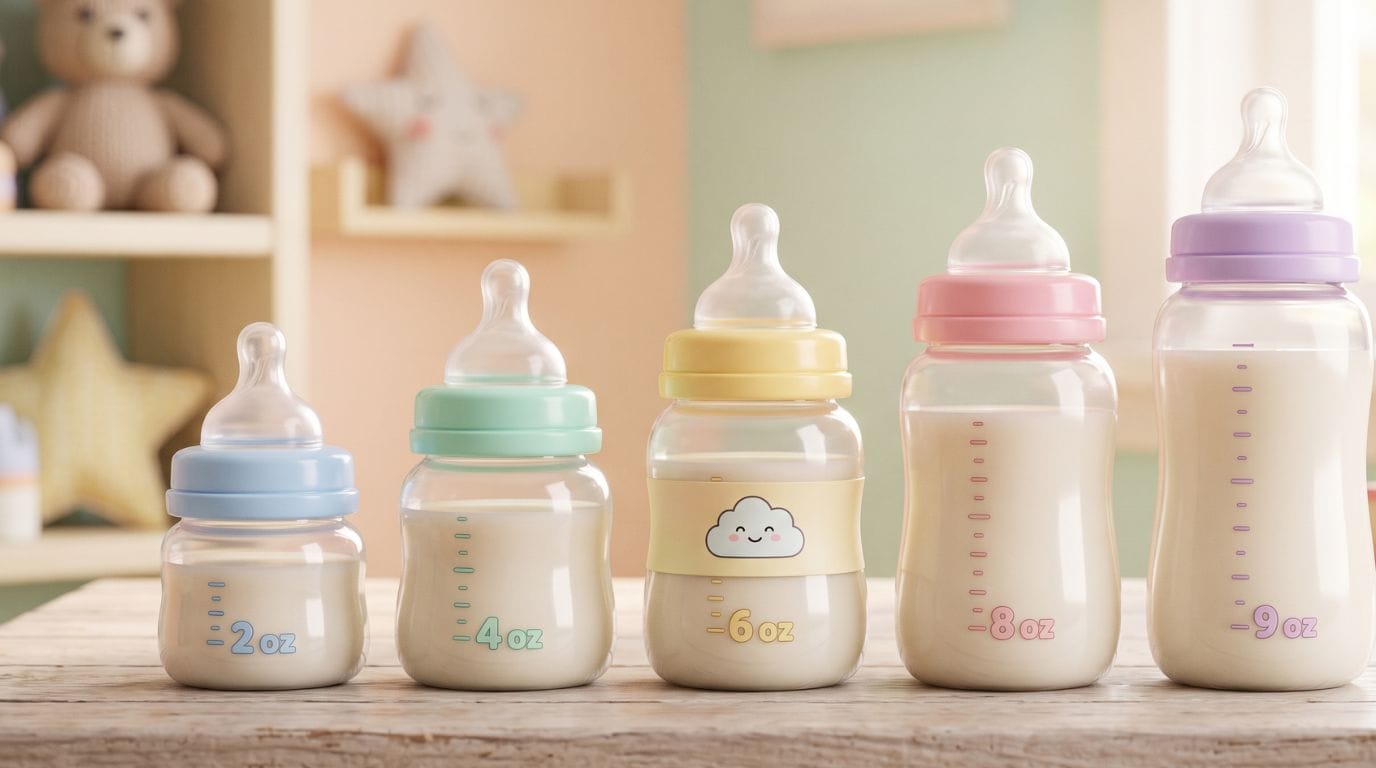
Quick Reference Feeding Table
To make things even easier for you, I have put together a quick reference table. You can take a screenshot of this and keep it on your phone!
| Baby’s Age | Amount Per Feeding | Feedings per 24 Hours |
| 1st Week | 1 – 2 oz (30 – 60 ml) | 8 – 12 times |
| 1st Month | 2 – 4 oz (60 – 120 ml) | 6 – 8 times |
| 2 – 3 Months | 4 – 5 oz (120 – 150 ml) | 5 – 7 times |
| 4 – 6 Months | 4 – 8 oz (120 – 240 ml) | 4 – 6 times |
Spotting the Signs: Is Your Baby Hungry?
Babies are actually excellent communicators, even before they can say their first word. They will tell you when they are hungry long before they start crying.
Crying is actually a late sign of hunger. If you can catch the early cues, feeding time will be much calmer for both of you.
Getting the formula milk for baby 0-6 months quantity right is much easier when you follow their lead and feed them on demand. Look out for these early hunger signs:
- Smacking their lips or opening and closing their mouth.
- Rooting around, turning their head to look for a bottle.
- Bringing their little hands up to their mouth or face.
- Fidgeting, squirming, or acting restless in their crib.
Signs That Your Baby is Full
Just as they tell you when they are hungry, they will clearly let you know when they are done. Never force a baby to finish a bottle if they are showing signs of being full.
- Turning their head away from the bottle.
- Closing their lips tightly.
- Falling into a deep, relaxed sleep.
- Relaxing their hands and letting their arms drop to their sides.
Is My Baby Getting Enough to Eat?
This is probably the number one worry for every new parent. Since you can see the milk disappearing from the bottle, it is easier than breastfeeding, but the worry is still there!
The best way to know if your baby is getting enough is to look at what comes out the other end. Diapers are your best friend when it comes to tracking health.
A well-fed baby will have about 5 to 6 heavy, wet diapers every 24 hours. Their urine should be pale and mild-smelling.
They will also have regular bowel movements. While the frequency can vary, passing soft stools easily is a great sign of a happy tummy.
Another great indicator is healthy weight gain. Your pediatrician will track this closely at your regular checkups, so trust the doctor’s scale!
The Art of Paced Bottle Feeding
Have you ever heard of paced bottle feeding? It is a fantastic technique that helps prevent overfeeding and tummy aches.
When milk flows too fast from a bottle, babies can accidentally eat more than they need. Paced feeding slows the process down, mimicking the natural flow of breastfeeding.
To do this, hold your baby in an upright position rather than laying them flat on their back. Keep the bottle horizontal to the ground so the milk does not rush out.
Let your baby draw the nipple into their mouth and take breaks every few minutes. This gives their brain time to register that their tummy is getting full.
Let’s Talk About Burping
Formula-fed babies tend to swallow a bit more air than breastfed babies. Because of this, burping is an absolute must!
Trapped gas can make a baby feel artificially full, causing them to stop eating early. Then, they will wake up crying with a tummy ache an hour later.
Try to burp your baby halfway through their bottle and again at the very end. If they do not burp after a minute or two of gentle back patting, just move on.
You can burp them over your shoulder, sitting up on your lap, or gently laying them face down across your knees. Find whichever position makes your baby the most comfortable.
Safety First: How to Prepare Bottles Properly
Making a bottle seems simple, but there are some strict rules you need to follow for your baby’s safety. Their immune systems are still very delicate.
No matter the formula milk for baby 0-6 months quantity you are preparing, always follow the exact scoop-to-water ratio on the tin. Adding too much water can cause malnutrition, and too little water can hurt their kidneys.
Always wash your hands thoroughly before handling formula or bottles. Make sure all bottles and nipples are properly sterilized, especially in the first few months.
When mixing, always put the exact amount of water in the bottle first, then add the powdered formula. If you add the powder first, you will not get an accurate water measurement.
Storing Formula Safely
If you make a bottle and your baby does not finish it, you must throw out the leftover milk within one hour. Bacteria from their mouth gets into the bottle and multiplies quickly.
You can pre-mix formula and keep it in the back of the refrigerator for up to 24 hours. This is a great trick for quick middle-of-the-night feedings!
Never, ever use a microwave to heat a baby bottle. It creates dangerous hot spots that can severely burn your baby’s mouth and throat.
Instead, warm the bottle by placing it in a bowl of warm water for a few minutes. Always test the temperature on the inside of your wrist before giving it to your baby.
Surviving the Nighttime Feedings
Night feedings are exhausting, but they are a totally normal and necessary part of having a baby under six months old. Their tummies simply cannot hold enough milk to last a full 12 hours yet.
Keep the lights dim, avoid making too much noise, and avoid stimulating eye contact during night feeds. You want to teach them that nighttime is for sleeping, not playing.
Have your bottles, formula, and water pre-measured and ready on the nightstand. The faster you can make the bottle, the faster you can both go back to sleep!
Growth Spurts: When They Suddenly Turn into Bottomless Pits
Right when you think you have a perfect feeding schedule figured out, your baby will hit a growth spurt. Suddenly, they will want to eat all day long!
A common question is whether the formula milk for baby 0-6 months quantity should change during a growth spurt, and the answer is yes. You should definitely offer an extra ounce or two if they are still showing hunger cues.
Common times for growth spurts are around 2 to 3 weeks, 6 weeks, 3 months, and 6 months. These phases usually only last a few days, so just ride the wave and feed them extra.
Your baby is working hard to grow bones, muscle, and brain tissue. That extra milk is giving them the building blocks they desperately need.
Common Mistakes to Avoid
We are all human, and parents make mistakes—it is part of learning! But here are a few formula-feeding pitfalls you can easily avoid.
- Switching brands too often: Unless your doctor recommends it, try to stick to one brand. Switching around can upset a sensitive baby’s tummy.
- Propping the bottle: Never leave a baby alone with a propped bottle. It is a major choking hazard and increases the risk of ear infections.
- Adding cereal to the bottle: Unless specifically prescribed by a pediatrician for reflux, never put baby cereal in a milk bottle. It is a choking hazard and provides empty calories.
Frequently Asked Questions from New Parents
I know you probably still have a few lingering questions. Let’s tackle some of the most common things parents ask about formula feeding.
1. Can I use tap water to make baby formula?
It depends on where you live. In many places, tap water is safe if boiled first and then cooled. However, it is always best to check with your local health guidelines or your pediatrician.
2. How do I know if the formula is too hot?
Shake a few drops onto the inside of your wrist. It should feel lukewarm, not hot and not cold. Room temperature is perfectly fine for babies, too!
3. Does my baby need extra water in the summer?
No. Before 6 months of age, your baby gets all the hydration they need from their formula. Giving them plain water can dangerously disrupt their electrolyte balance.
4. What if my baby throws up after a feed?
A little spit-up is completely normal as their digestive system matures. However, if they are projectile vomiting or seem to be in pain, definitely call your doctor.
5. How long does a tin of powdered formula last once opened?
Most brands recommend using the powder within one month of opening the tin. Always check the manufacturer’s label to be absolutely sure, and store it in a cool, dry place.
Final Thoughts & Next Steps
You made it to the end! See? Figuring out the right amount of formula is not as terrifying as it seems at first glance.
Remember, you are doing an amazing job. There will be good days where everything goes perfectly, and tough days where you feel completely lost. That is just the normal rhythm of parenting.
Trust your instincts, watch your baby’s cues, and do not be afraid to reach out to your pediatrician if you ever feel unsure. You are your baby’s best advocate and expert.