The Ultimate Baby sleep sack tog guide
Welcome to the ultimate baby sleep sack tog guide, your new best friend for getting your little one to sleep safely and soundly! If you are a new parent, you probably already know the midnight struggle of wondering if your baby is too hot or too cold.
It is completely normal to stare at the baby monitor, second-guessing the pajamas you chose for the night.
We have all been there, gently touching our sleeping baby’s chest in the dark, hoping we made the right choice.
You want your baby to be cozy, comfortable, and most importantly, safe while they snooze.
That is exactly why understanding sleep sacks and their temperature ratings is a total game-changer for parents.
Grab a cup of coffee (or tea!), sit back, and let’s dive into everything you need to know about keeping your baby perfectly comfortable all night long.
What Exactly is a TOG Rating?
Before we get into the details, let’s talk about what that weird little word “TOG” actually means.
TOG stands for “Thermal Overall Grade.”
It is basically a fancy industry term that measures how warm a piece of clothing or a blanket is.
The higher the TOG rating, the thicker and warmer the fabric will be.
Conversely, the lower the TOG rating, the lighter and more breathable the material is.
Think of it like choosing between a light summer sheet and a heavy winter duvet for your own bed.
Using a reliable baby sleep sack tog guide helps take the guesswork out of bedtime, ensuring your baby is always dressed perfectly for the room temperature.
The Ultimate Baby Sleep Sack TOG Guide for Every Season
To make things super easy, I have broken down the different ratings you will see when shopping.
Remember, you should always base your choice on the temperature of your baby’s room, not the weather outside!
0.2 to 0.5 TOG (Warm Weather & Summer)
-
Room Temperature: 75°F to 80°F (24°C to 27°C).
-
The Vibe: Light, breezy, and super breathable.
-
What it feels like: A very thin muslin swaddle or a light cotton t-shirt.
-
Best for: Hot summer nights, daytime naps in a warm room, or if you live in a tropical climate.
1.0 TOG (Moderate & Transitional Weather)
-
Room Temperature: 68°F to 75°F (20°C to 24°C).
-
The Vibe: The perfect middle ground.
-
What it feels like: A standard lightweight blanket or a double layer of soft cotton.
-
Best for: Spring and fall, or if you keep your air conditioning running at a steady, moderate temperature year-round.
2.5 TOG (Cool Weather & Standard Nights)
-
Room Temperature: 61°F to 68°F (16°C to 20°C).
-
The Vibe: Cozy, snug, and warm.
-
What it feels like: A standard, plush comforter or a softly quilted sleeping bag.
-
Best for: Standard winter nights or if your baby’s nursery tends to get a bit chilly when the sun goes down.
3.5 TOG (Cold Weather & Winter)
-
Room Temperature: Below 61°F (15°C and below).
-
The Vibe: Heavy-duty warmth.
-
What it feels like: A thick, padded winter duvet.
-
Best for: Very cold climates, drafty older houses, or going camping with your little one.
Why You Need a Baby Sleep Sack TOG Guide for Safe Sleep
You might be wondering why we can’t just toss a cute baby blanket over them and call it a night.
The truth is, loose blankets pose a significant safety risk for babies under 12 months old.
Blankets can easily ride up over a baby’s face, increasing the risk of Sudden Infant Death Syndrome (SIDS).
Sleep sacks, on the other hand, are wearable blankets that stay securely in place no matter how much your baby wiggles.
By following a proper baby sleep sack tog guide, you are not just keeping them cozy; you are actively practicing safe sleep guidelines.
It completely removes the risk of loose bedding while ensuring their body temperature stays perfectly regulated.
How to Dress Your Baby Underneath the Sleep Sack
A sleep sack is only half of the bedtime outfit equation!
What you put on your baby underneath the sleep sack is just as important as the sack itself.
Here is a quick cheat sheet on how to layer like a pro:
-
Under a 0.5 TOG: Just a diaper, or a very thin, short-sleeved cotton bodysuit.
-
Under a 1.0 TOG: A short-sleeved bodysuit or light long-sleeved pajamas, depending on the exact room temp.
-
Under a 2.5 TOG: A long-sleeved cotton bodysuit or a warm, footed pajama set.
-
Under a 3.5 TOG: A warm, long-sleeved bodysuit plus a thick footed pajama (layering is key here!).
Never use hats or beanies indoors while your baby is sleeping, as babies release excess body heat through their heads!
How to Check if Your Baby is Too Hot or Too Cold
Even with the best preparation, you might still want to check on your little one’s temperature.
Please don’t judge their warmth by feeling their hands or feet!
A baby’s extremities are naturally colder than the rest of their body because their circulatory system is still developing.
Instead, use the “Neck Check” method.
Gently place two fingers on the back of your baby’s neck or flat on their chest.
If their skin feels warm and dry, they are perfectly comfortable!
Signs Your Baby is Overheating
-
Their neck or chest feels sweaty or clammy.
-
Their cheeks are unusually red and flushed.
-
They are breathing heavier or faster than normal.
-
They seem unusually lethargic or are difficult to wake up.
Signs Your Baby is Too Cold
-
Their neck or chest feels cool to the touch.
-
They are waking up frequently during the night.
-
They are fussing or crying more than usual without being hungry.
If you notice any of these signs, adjust their clothing layers immediately rather than changing the sleep sack entirely.
Choosing the Best Material for Your Baby’s Sleep Sack
Not all sleep sacks are created equal, and the fabric you choose plays a huge role in your baby’s comfort.
Let’s look at the most popular materials on the market so you can make the best choice.
-
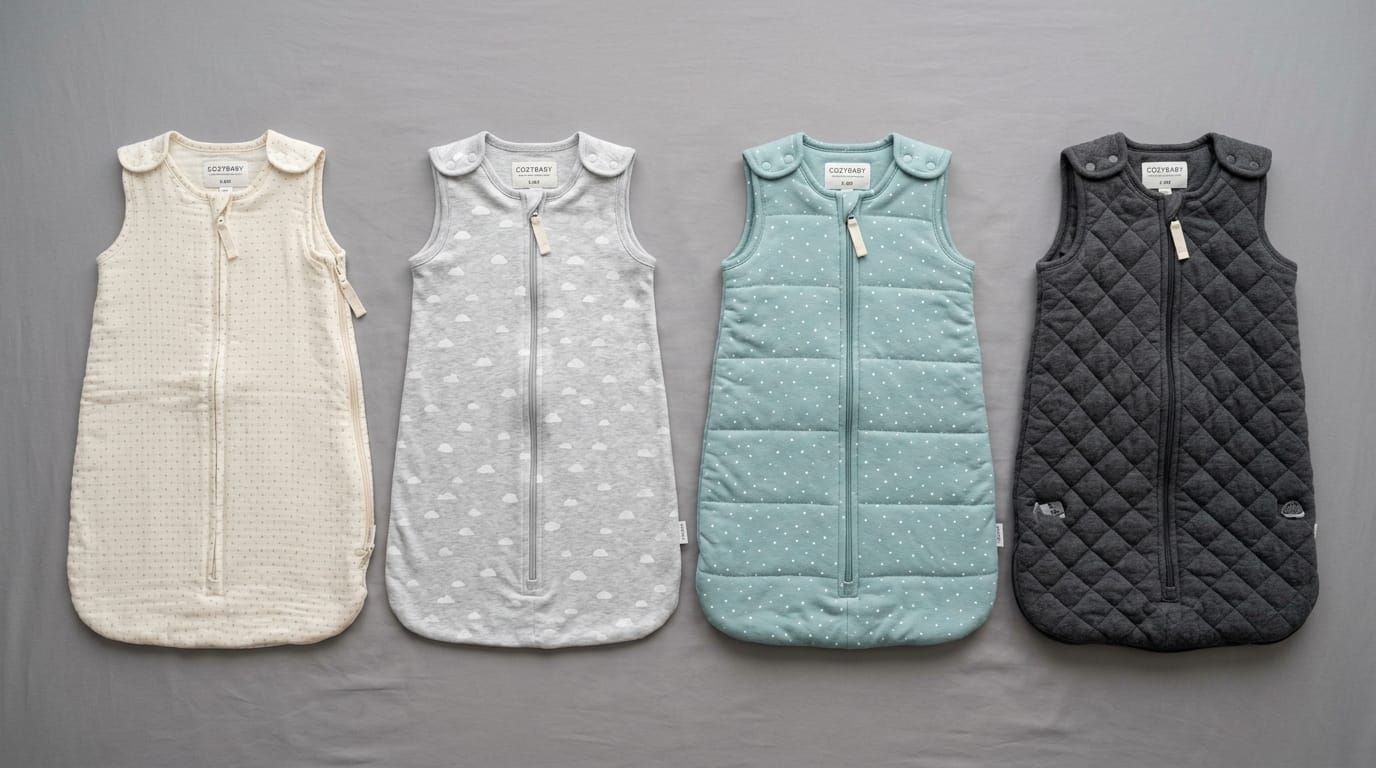
Cotton: This is the most common material. It is highly breathable, easy to wash, and perfect for year-round use.
-
Muslin: Extremely lightweight and airy. Muslin is the absolute best choice for hot summer months.
-
Bamboo: Bamboo fabric is silky soft and naturally temperature-regulating. It is great for babies with sensitive skin or eczema.
-
Merino Wool: This is a premium option. Merino wool is magical because it naturally adjusts to your baby’s body temperature, keeping them warm in winter and cool in summer.
-
Microfleece: Very warm and cozy, but not as breathable as natural fibers. Use fleece with caution to avoid overheating.
I highly recommend sticking to natural fibers like cotton, bamboo, or wool for the best breathability.
Tips for Transitioning Between Seasons
When the weather starts to change, transitioning your baby’s sleepwear can feel tricky.
Spring and fall are notorious for warm days and freezing cold nights!
During these transitional months, it is best to rely on layers rather than jumping straight to a thicker sleep sack.
For example, stick to your 1.0 TOG sack, but swap out their short-sleeved bodysuit for a long-sleeved footed pajama.
This way, if the night suddenly gets warmer, you can easily remove a layer of clothing without completely changing their sleep environment.
Having a digital room thermometer in the nursery is an absolute must-have for these unpredictable seasons.
Common Mistakes Parents Make with Sleep Sacks
We are all learning as we go, but there are a few common pitfalls you should try to avoid.
First, never buy a sleep sack that is too big just so your baby can “grow into it.”
If the neck hole is too large, your baby’s head could slip down inside the sack, which is a major safety hazard.
Second, avoid putting too many layers underneath. Overheating is much more dangerous for a baby than being slightly chilly.
Finally, do not forget to wash the sleep sack regularly!
Babies drool, spit up, and have diaper leaks, so having at least two sleep sacks of the same TOG rating is a smart move for those 3 AM laundry emergencies.
Frequently Asked Questions (FAQ)
Can my baby wear a sleep sack once they start rolling over? Yes, absolutely! In fact, sleep sacks are perfect for babies who roll over. Just make sure you are no longer using a swaddle that restricts their arms. Their arms must be completely free.
Do I need every single TOG rating? Not at all! Most parents get by perfectly fine with just a 1.0 TOG for warmer months and a 2.5 TOG for colder months. You can adjust the layers underneath to handle slight temperature shifts.
When should my child stop wearing a sleep sack? There is no strict age limit! Many children wear toddler-sized sleep sacks (some even come with little foot holes for walking) until they are 2 or 3 years old. You can stop when your toddler is ready to transition to a regular blanket.
Conclusion: Rest Easy, You’ve Got This!
Navigating the world of baby sleep can feel overwhelming at first, but it doesn’t have to be.
By understanding your baby’s room temperature and choosing the right fabric, you are setting them up for sleep success.
I recommend bookmarking this baby sleep sack tog guide on your phone so you can quickly reference it whenever the seasons change.
Remember, you know your baby better than anyone else. Trust your instincts, do the “neck check,” and don’t stress over being perfectly exact every single night.
If you found this guide helpful, why not share it with a fellow parent who could use a little extra sleep?
Leave a comment below and let me know: what is your absolute favorite sleep sack brand for your little one?
Happy sleeping to you and your beautiful baby!