The Ultimate Guide to Airplane Travel With Baby: Tips for a Stress-Free Flight
Are you planning a family vacation and feeling incredibly anxious about the upcoming airplane travel with baby? Take a deep breath, because this journey is entirely manageable with the right preparation and mindset.
Traveling with an infant might seem like a daunting task, but countless parents do it every single day. With a solid game plan, you can turn a potentially stressful situation into a smooth adventure.
This comprehensive guide will walk you through everything you need to know about flying with your little one. From booking the tickets to stepping off the plane, we have got you covered.
Why Airplane Travel With Baby Doesn’t Have to Be Scary
It is completely normal to feel nervous about taking your infant on a flight for the first time. The fear of them crying non-stop in a confined space is a common anxiety for many parents.
However, airplane travel with baby is often much easier than you might anticipate. Infants, especially younger ones, are naturally lulled to sleep by the white noise and vibration of the aircraft.
The key to a successful flight lies entirely in your pre-trip preparation. When you anticipate your child’s needs, you can prevent most meltdowns before they even start.
Let’s dive into the actionable steps you can take to make your next flight a total breeze.
Pre-Flight Preparation: Setting Up for Success
The foundation of stress-free airplane travel with baby begins long before you arrive at the airport. How you book your flight can significantly impact the entire travel experience.
Booking the Right Flight Time
Whenever possible, try to book a flight that aligns with your child’s natural sleep schedule. Direct flights are always the best option when you are flying with a little one.
If you have to book a layover, make sure it is long enough so you do not have to sprint through the terminal. A two-hour layover is usually the sweet spot for a diaper change and a feeding.
Early morning flights are often less crowded and less prone to delays. Plus, babies are usually in a better mood after waking up from a full night of rest.
Selecting the Best Seats for Airplane Travel With Baby
Seat selection is a crucial part of making airplane travel with baby as comfortable as possible. A window seat gives you a wall to lean against if you are nursing or holding a sleeping infant.
An aisle seat, on the other hand, allows you to easily get up and walk around if your little one gets fussy. Think about your personal preference and what will make you feel most relaxed.
If your budget allows, booking an extra seat for your car seat is the safest and most comfortable option. Alternatively, look into booking bulkhead seats where you can request a bassinet from the airline.
Packing Essentials for Your Infant
Packing efficiently is an absolute lifesaver when it comes to airplane travel with baby. You want to have everything you need within arm’s reach without carrying an overly heavy bag.
The Ultimate Diaper Bag Checklist
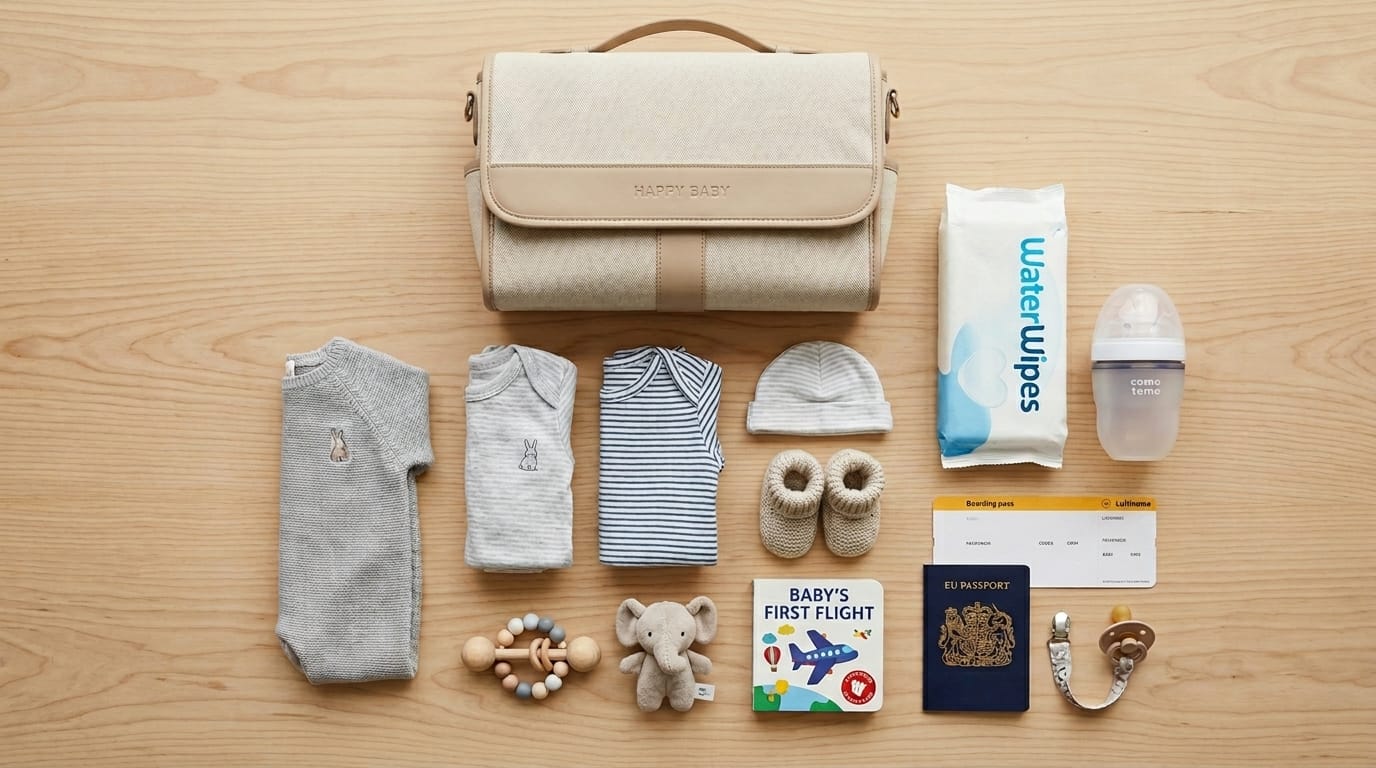
Your diaper bag will be your survival kit for the duration of your travel day. Always pack more diapers and wipes than you think you will actually need.
A good rule of thumb is to pack one diaper for every hour of travel, plus a few extras for emergencies. Do not forget to include a portable changing pad and scented bags for dirty diapers.
You should also pack at least two extra changes of clothes for your infant. It is highly recommended to pack an extra shirt for yourself in case of spit-up or spills.
Toys and Entertainment
Keeping your child entertained is vital for a peaceful flight. Introduce a few brand-new toys that they have never seen before to keep their attention longer.
Window cling stickers, soft fabric books, and sensory toys are perfect for keeping little hands busy. You can easily order affordable, travel-friendly toys on amazon a few weeks before your trip.
Avoid bringing toys that make loud noises or have multiple small pieces that can roll under the seats. Keep the entertainment simple, engaging, and relatively quiet.
Feeding Essentials
Whether you are breastfeeding, formula-feeding, or offering solids, feeding is a major part of your flight plan. If you are formula-feeding, measure out the powder into individual dispensers ahead of time.
If your infant has started eating solid foods, bring plenty of their favorite snacks. Puffs, teething crackers, and fruit pouches are excellent distractions during a long flight.
Remember to pack extra bottles, pacifiers, and a large water bottle for yourself. Staying hydrated is especially important if you are a nursing mother on an airplane.
Navigating the Airport Like a Pro
The airport experience can be chaotic, but with a solid plan, you can glide through it effortlessly. Arrive at the airport earlier than you normally would to account for extra baby-related delays.
Check-in and Security
Checking your heavy luggage allows you to keep your hands free for your infant and your diaper bag. Most airlines allow you to check a stroller and a car seat completely free of charge.
When it comes to airport security, the TSA has special rules regarding airplane travel with baby. You are allowed to bring breast milk, formula, and baby food in quantities greater than 3.4 ounces.
Simply declare these liquids to the TSA agent before sending your bags through the X-ray machine. They may need to perform a quick, harmless test on the liquids, so expect a slight delay.
Boarding Strategies
Airlines generally offer pre-boarding for families traveling with small children. This gives you extra time to wipe down your seats, stow your bags, and get settled.
However, some parents prefer the “divide and conquer” boarding method. One parent boards early to set up the area, while the other stays in the terminal with the child to burn off energy.
If you are traveling solo with your infant, taking advantage of pre-boarding is almost always your best bet.
Surviving the Flight: Airborne Strategies
You have made it onto the plane, and now the real journey begins. Managing your child’s comfort during the flight is the secret to a tear-free experience.
Taking Off and Landing
The most common reason infants cry during airplane travel is ear pain caused by cabin pressure changes. Unlike adults, they do not know how to intentionally pop their ears to relieve the discomfort.
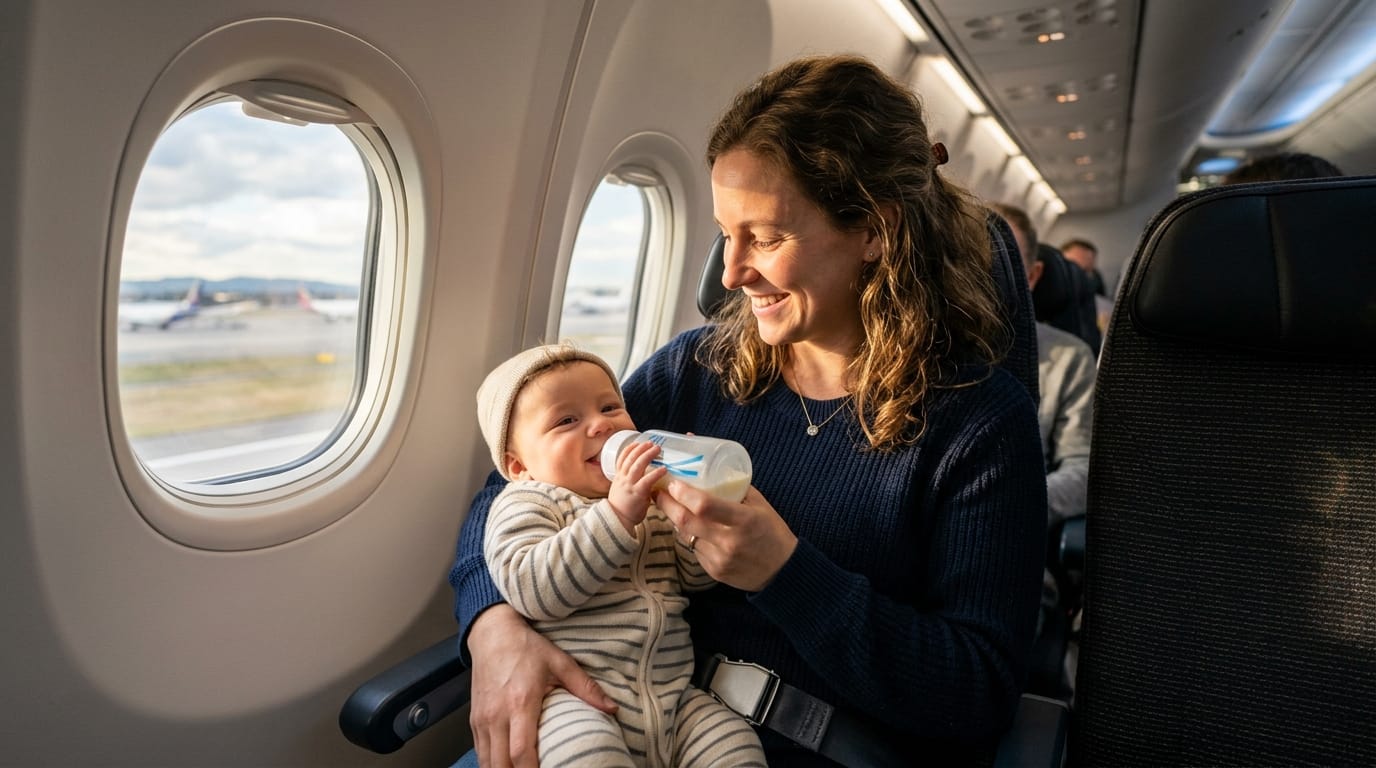
To help them, encourage your infant to swallow during takeoff and the initial descent. You can achieve this by nursing them, offering a bottle, or giving them a pacifier.
If your child is fast asleep during takeoff or landing, do not wake them up. Sleeping babies usually do not feel the ear pressure changes as intensely as awake ones do.
Sleep Strategies for a Flying Baby
Getting your infant to sleep on a plane can feel like winning the lottery. Try to recreate their normal sleep environment as much as possible despite the cramped space.
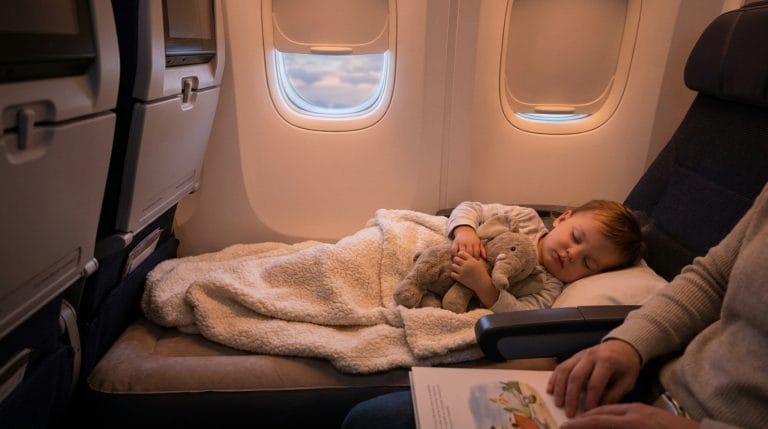
When you are traveling with your baby, comfort is key to helping them drift off. Bring their favorite lightweight blanket or a familiar sleep sack from home.
Creating a Cozy Sleep Environment
Use a nursing cover or a breathable blanket to block out the harsh overhead cabin lights. The natural hum of the airplane engine acts as an excellent white noise machine.
If your infant is struggling to settle, do not be afraid to stand up and gently bounce them in the galley area. Flight attendants are usually very understanding and accommodating to parents trying to soothe an infant.
Managing Tantrums and Crying Spells
Despite your absolute best efforts, your infant might still have a crying spell during the flight. The most important thing you can do in this situation is to remain calm yourself.
Babies can easily pick up on your stress and anxiety, which can make them cry even harder. Take a deep breath, ignore the other passengers, and focus entirely on comforting your child.
Try changing their scenery by walking them up and down the airplane aisle. Sometimes, simply looking at new faces or feeling a different motion is enough to stop the tears.
Age-Specific Tips for Airplane Travel With Baby
Every stage of a child’s development brings unique challenges and advantages when flying. Tailoring your approach to your child’s specific age group will make a world of difference.
Traveling with a Newborn (0-3 Months)
Many parents find that airplane travel with baby is actually easiest during the newborn stage. Newborns sleep for the majority of the day and are relatively easy to comfort with a feed.
Your main concern during this stage will be protecting their developing immune system. Wipe down the armrests, tray tables, and seatbelts with antibacterial wipes as soon as you sit down.
Keep your newborn close to you in a soft structured carrier to prevent strangers from trying to touch them.
Traveling with an Older Infant (4-11 Months)
At this age, babies are much more alert and require more active entertainment. They are learning to grasp objects and are easily fascinated by their surroundings.
This is the perfect age to utilize interactive toys, mirrors, and soft books during the flight. You will need to be more proactive in keeping them occupied while they are awake.
Snacks also become a powerful tool at this age. A slow-to-eat snack like a teething biscuit can buy you 15 minutes of precious silence.
Traveling with a Toddler (12-24 Months)
As your baby transitions into toddlerhood, airplane travel becomes more about containment and distraction. Toddlers naturally want to walk, explore, and move around, which is hard on a plane.
Screen time rules can be temporarily relaxed during a long flight. Downloading a few of their favorite shows onto a tablet can be a complete lifesaver.
Pack plenty of novel, mess-free activities like triangular crayons, water-reveal coloring books, and magnetic drawing boards.
Health and Safety Tips During the Flight
Keeping your infant healthy and safe should always be your top priority when flying. The recycled air in airplane cabins can be very dry, which can dehydrate your little one.
Ensure they are drinking plenty of breast milk, formula, or water throughout the flight. You can also apply a small amount of baby-safe saline spray to their nose to keep their nasal passages moist.
Always wash your hands thoroughly or use hand sanitizer after every single diaper change in the airplane lavatory. Those tiny airplane bathrooms harbor a lot of germs, so hygiene is absolutely critical.
Gear That Makes Airplane Travel With Baby Easier
Investing in the right travel gear can significantly reduce your stress levels on travel day. You do not need to buy every gadget on the market, but a few key items are essential.
Strollers and Baby Carriers
A lightweight, compact travel stroller is worth its weight in gold for navigating crowded airports. Look for one that can easily be folded with one hand while you hold your baby in the other.
A baby carrier is arguably the most important piece of gear for airplane travel with baby. It keeps your hands free while keeping your infant secure and close to your chest.
Many parents use the carrier to walk their baby to sleep up and down the airplane aisles. It is an indispensable tool for hands-free comfort.
Car Seats on Airplanes
If you purchased a separate seat for your infant, bringing your FAA-approved car seat on board is highly recommended. It provides the safest environment for them during turbulence.
Familiarity is another huge benefit; your baby is already used to sleeping in their car seat. This makes it much more likely that they will nap successfully during the flight.
If you are checking your car seat, invest in a padded travel bag to protect it from damage in the cargo hold.
Post-Flight: Landing and Adjusting
Congratulations, you have successfully survived the flight! But the journey is not quite over until you reach your final destination.
Wait for the crowds to clear out before attempting to disembark the plane with your baby. It is much easier to gather your belongings and your infant when you are not being rushed.
Once you arrive at your destination, try to get your child outside in the natural sunlight as soon as possible. This helps reset their internal clock and reduces the effects of jet lag if you have crossed time zones.
Be patient with your little one over the next few days. Travel can be exhausting for babies, and they may need some time to adjust to their new environment and schedule.
Conclusion: You Can Do This!
The thought of airplane travel with baby might give you butterflies in your stomach, but remember that you are fully capable of handling it. Preparation, patience, and a positive attitude are your best friends on travel day.
Expect that there might be a few bumps along the road, and give yourself grace when things do not go perfectly according to plan. Every flight you take with your child makes you a more experienced and confident traveling parent.
Embrace the adventure, pack those extra diapers, and get ready to make some incredible family memories around the world!
Are you ready for your upcoming family vacation? Share this comprehensive guide with your partner or other traveling parents, and drop a comment below with your own favorite baby travel hacks!